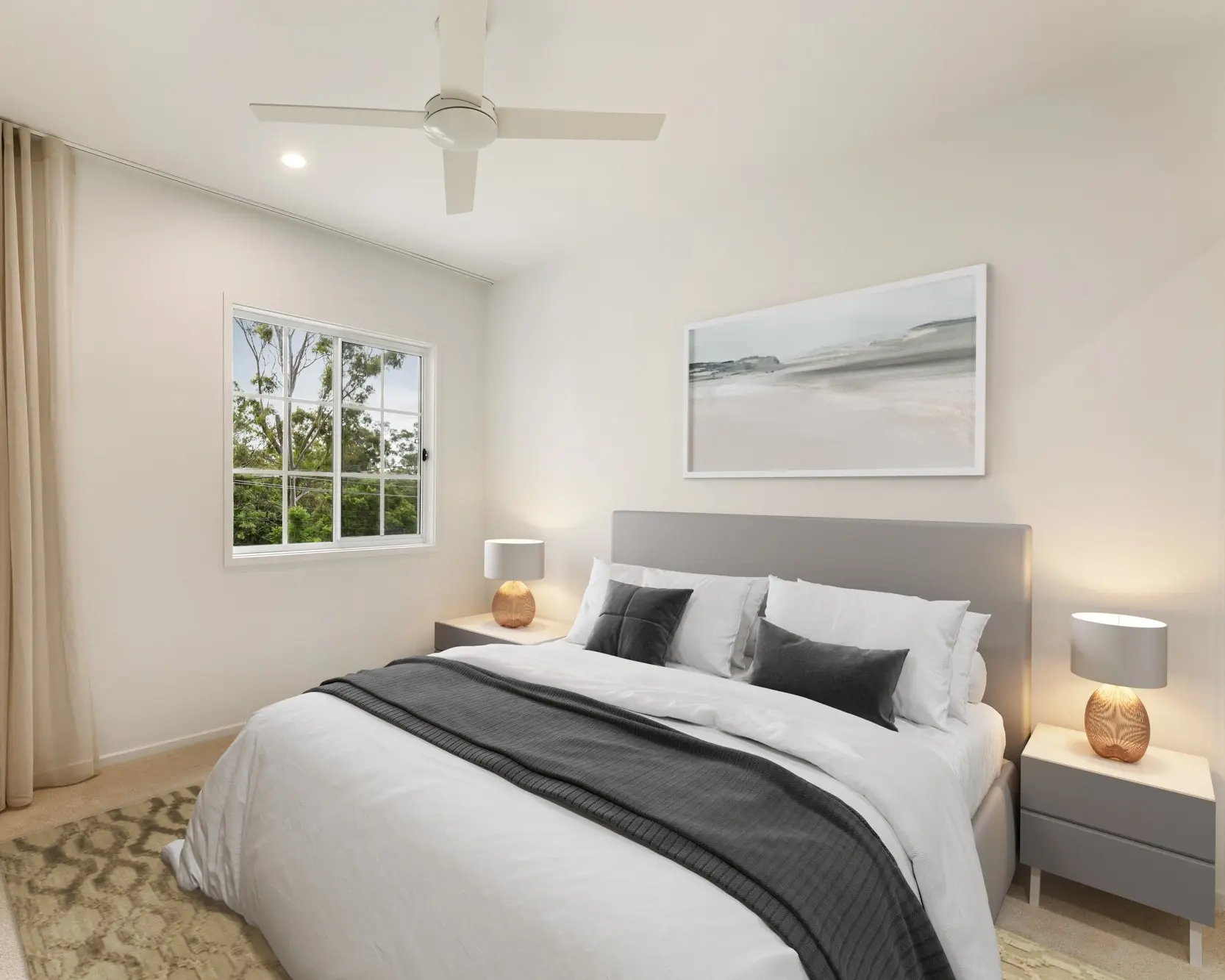
Bedroom layout guide for Australia: how to create a calmer, more sleep-supportive space
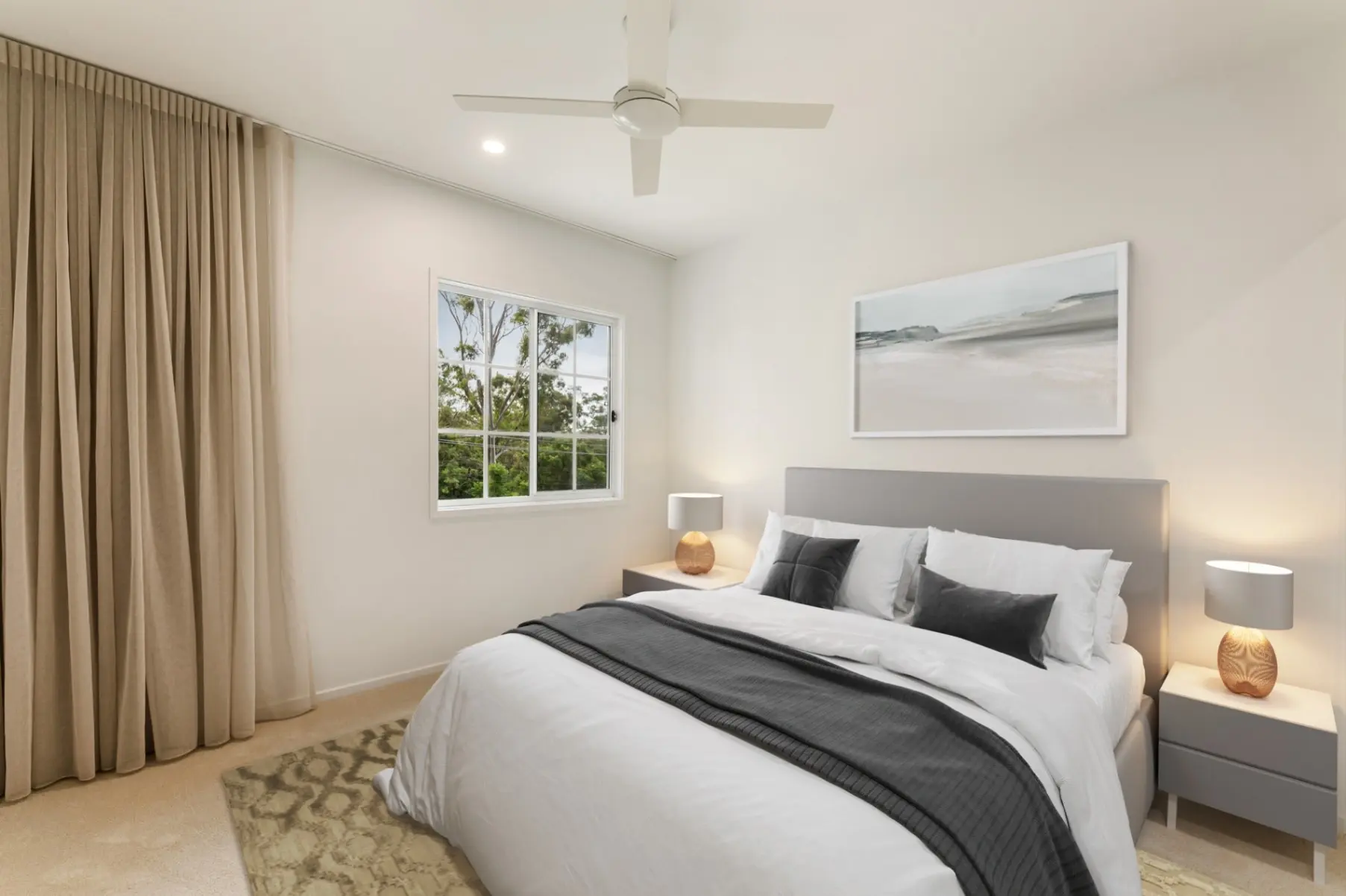
Introduction: why your bedroom setup matters
The bedroom is more than a place to sleep – it’s the environment that supports recovery. Layout, light, temperature, noise and clutter all influence how easily you unwind at night and how settled you feel in the morning.
Modern sleep research points in the same direction. Australian organisations, such as the Sleep Health Foundation, advise that bedrooms should be quiet, dark, and comfortable with good temperature control, and that screens and electronic devices are best kept out of the bedroom.
Healthdirect Australia and other Australian health websites echo similar guidance on keeping the bedroom primarily for sleep and intimacy, rather than for work or scrolling.
The good news is that small, practical design changes can make a noticeable difference.
When your bed feels anchored, your pathways are clear, and your lighting is gentle at night, the room becomes quieter – visually and mentally.
That matters in real Australian homes, where bedrooms often do double-duty near busy streets, smaller footprints, kids and pets, coastal humidity, or an ensuite that brings extra moisture into the mix.
This guide blends sleep hygiene principles with interior-design fundamentals: clear circulation, a sense of security, low “visual noise”, and a cohesive material palette that holds up to everyday living. You’ll also find practical ensuite considerations – ventilation, moisture control and waterproofing guidance (with NCC / AS 3740 references where relevant) – so the whole suite works as one calm retreat.
Note: This article is general information, not medical advice. If you have persistent sleep issues, speak with a qualified health professional.
If you only read one thing…
A calmer, more sleep-supportive bedroom usually comes down to five high-leverage moves:
- Anchor the bed (solid headboard, supportive wall, no glaring sightlines).
- Protect pathways (comfortable clearance, fewer obstacles, less “stuff” in view).
- Control light at night (warm globes, dimmers, block external glare).
- Manage sound + temperature (soft textiles, sealing gaps, breathable bedding).
- Treat the ensuite as part of the bedroom (ventilation, moisture control, compliant waterproofing).
At a glance: bedroom layout for better sleep
- Anchor the bed first. A supportive wall behind the headboard, clear sightlines to the door, and less exposure to glare or draughts makes the room feel more settled.
- Keep night-time circulation effortless. Clear the path from bed to door/ensuite, and aim for around 45 cm access on each side where possible (or one generous side in smaller rooms).
- Treat light as a wind-down tool. Layer warm lighting (ambient + bedside task), add dimmers if you can, and avoid harsh downlights over pillows. Block external glare with good window coverings.
- Reduce stimulation: sound, clutter, heat. Soft textiles and sealing gaps can soften noise; edited surfaces reduce “mental clutter”; breathable fibres and gentle air movement help in warmer Australian conditions.
- If there’s an ensuite, design it as part of the retreat. Manage light spill, fan noise and moisture; waterproofing and ventilation should align with Australian requirements (NCC guidance and standards such as AS 3740 are commonly referenced).
- Keep the suite cohesive. A restrained palette and low-glare finishes across bedroom and ensuite make the whole space feel calmer and easier to live with long-term.
What does “sleep-supportive bedroom design” look like?
A sleep-supportive bedroom combines solid interior design fundamentals with practical sleep hygiene habits.
It’s less about rules and more about reducing the things that keep your brain “on” at night — glare, clutter, awkward circulation, noise spikes, and the feeling that the room is doing too many jobs at once.
In Australian homes, the challenges are often very real-world: strong daylight, warmer nights in summer, coastal humidity, smaller room sizes, and ensuites that introduce extra light, sound and moisture right next to the sleep zone.
A useful way to think about it is in three layers:
1 Layout that feels settled
- The bed sits in a position that feels oriented (you know where the door is) without being exposed to heavy foot traffic or draughts.
- Pathways are clear and easy at night — especially between the bed and the door.
2 Sensory conditions that help you wind down
- Light can shift from “day mode” to “wind-down mode” (warm, dimmable, not glaring).
- Noise and temperature are managed so the room doesn’t feel on edge (soft textiles, sealing gaps, breathable bedding).
3 Visual calm (what you see from bed)
- Surfaces and sightlines feel edited: fewer cords, fewer piles, fewer high-contrast patterns.
- Materials and finishes are cohesive and low-glare, so the room reads soft in both daylight and lamplight.
Quick self-check (30 seconds)
If you’re not sure where to start, ask:
- From the pillow, what’s the first thing your eyes land on — calm or clutter?
- Can you walk from bed to the door (or bathroom) without weaving around obstacles?
- At night, can the room get genuinely dim and warm — or does it stay bright and “awake”?
How to adapt the approach to your home
- If your bedroom is small: prioritise clearance, wall-mounted lighting, and fewer surfaces (less visual noise beats more furniture).
- If you’re near traffic or a busy household: treat sealing gaps and adding soft textiles as high-impact upgrades.
- If you have an ensuite: manage light spill, exhaust fan noise, and moisture control so the suite feels like one calm retreat.
- If your room runs warm: breathable fibres, adjustable bedding layers and gentle air movement usually feel calmer than cold air blowing directly onto the bed.
How can your bedroom design support better sleep?
Your bedroom can’t “fix” sleep on its own — but it can help create the conditions that make winding down easier: low stimulation, comfort, and fewer disruptions overnight.
This aligns with widely recommended sleep hygiene principles: keep the bedroom dark, quiet, comfortably cool, and used mainly for sleep and intimacy rather than work or scrolling. (This is general information, not medical advice.)
In practical terms, a more sleep-supportive bedroom often comes down to:
- Less light at night, more light in the morning
Use window coverings that reduce streetlight and early sunrise glare, but still allow daylight during the day. If you wake early, check for “leaks” around roller blinds and consider block-out curtains with returns for better coverage.
- Lower noise and fewer sudden sound spikes
Soft textiles (rugs, curtains, upholstered bedheads) absorb echo and soften noise. If you’re near traffic, look at door seals and window sealing as a high-impact upgrade — even small gaps can make the room feel “on edge”. (For practical home sound-reduction ideas, see YourHome – Noise control).
- A cooler, more breathable sleep zone
Many Australians sleep better when the room runs slightly cooler than living areas. Breathable natural fibres (cotton, linen) and adjustable layers help. In warmer climates, gentle air movement (like a ceiling fan on low) can feel calmer than cold air blowing directly at the bed. (For climate-smart cooling ideas, see YourHome – Passive cooling.)
- A layout that feels stable and easy to move through
When pathways are clear and the bed feels anchored (solid headboard, supportive wall, not wedged into awkward circulation), the room tends to feel calmer and more intentional — especially at night when you’re half-awake.
- Fewer “mental triggers” in view
The things you see from bed matter. A chair covered in laundry, a glowing power board, paperwork on the dresser — they all keep the room subtly active. Prioritise closed storage, tidy surfaces, and a charging spot that’s not right beside your pillow.
🔹Expert Nero Tip: Treat bedroom improvements like a small home experiment. Change one variable at a time — for example, clear the floor path from bed to door, swap to warmer bedside globes, or move chargers out of sight — then live with it for two weeks and notice what genuinely helps you unwind.
How do you plan a bedroom layout for better sleep in Australia? 5 practical tips
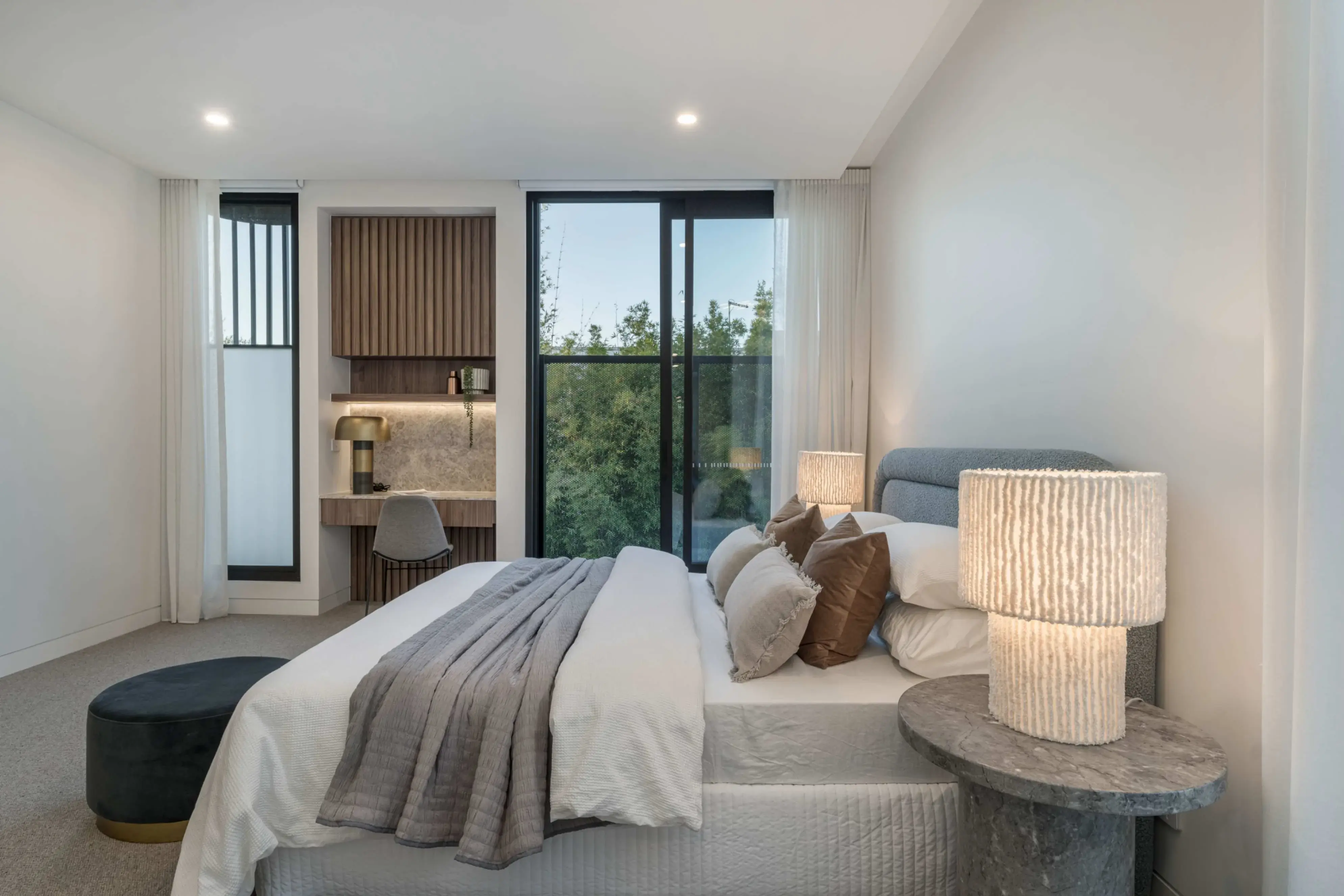
Before you move a single piece of furniture, it helps to think about how you want the room to work at night — not just how it looks in daylight.
A sleep-supportive bedroom layout starts with the bed, then builds outwards to protect clear circulation, comfortable clearances and a sense of orientation (so the room feels calm, not chaotic).
Tip 1 Position the bed for comfort and a sense of security
Where possible, place the bed so you can see the bedroom door without being directly in line with it. Many people feel more settled when they’re oriented in the room — especially in busy households with kids, pets, or night-time movement in hallways.
Aim for:
- the bed diagonally across from the door if the room allows
- a position where you’re not staring straight into a hallway or an ensuite doorway
- avoiding a layout where the bed sits in a direct “runway” from door to bed, which can feel exposed and disruptive
If your room is tight, focus on the controllables: window coverings, lighting placement, and keeping the path from bed to door clear and uncluttered.
Tip 2 Use a solid headboard and a supportive wall
A sturdy headboard against a solid wall helps the bed feel anchored and reduces visual “float”. Upholstered or timber headboards tend to read softer and calmer than thin metal frames, especially in echoey rooms.
Try to avoid placing the headboard directly under a window if:
- you get draughts, early morning glare, or streetlight spill
- the window wall makes the bed feel exposed
If the window wall is unavoidable, lean on:
- a taller, more substantial headboard
- full-length curtains or effective block-out blinds to reduce glare and improve comfort
Tip 3 Keep access on both sides (or create the illusion of space)
Ideally, leave around 45 cm clearance on both sides so getting in and out feels effortless and the room doesn’t feel cramped at night.
If one side must sit closer to a wall:
- keep the open side generous
- use wall-mounted bedside lighting or slimline tables
- choose lighter bedding and a restrained palette to visually expand the space
This is one of those “small change, big daily payoff” moves — it affects everything from making the bed to midnight trips to the bathroom.
Tip 4 Be mindful of ceilings, soffits, and wet-area adjacency
Even without any “rules”, certain architectural features can feel heavy over a bed — low ceilings, pronounced beams, deep bulkheads, or a busy pendant right above where you rest.
If you can’t avoid them:
- keep the ceiling finish simple so the structure recedes visually
- avoid busy pendants directly above the bed
- choose calm, well-scaled artwork (too small and scattered often feels visually noisy)
Also consider what sits behind the bed wall. If it backs onto an ensuite, plumbing noise, moisture risk and exhaust-fan sound can affect comfort over time.
🔹Compliance check (Australia): If your bed shares a wall with a bathroom/ensuite, make sure wet-area design and waterproofing are done properly. The National Construction Code (NCC) includes requirements for wet areas and AS 3740:2021 is commonly referenced for domestic wet-area waterproofing (requirements vary by state/territory and project; confirm locally). Good detailing helps reduce the risk of hidden leaks and mould — both of which undermine a calm, healthy bedroom environment.
Tip 5 Declutter the “sleep zone” (what you see from bed matters)
A calm room is usually a simple room. Start with what’s in your direct sightline from bed: nightstands, dresser tops, open shelving, cords and chargers.
Quick wins:
- clear floors and pathways (especially between bed and door)
- minimise under-bed storage, or keep it limited to neatly contained linens
- hide cords and power boards where you can
- remove work items and paperwork from view
- keep “catch-all chairs” (laundry piles) out of the sleep zone
Also Read: Master Bedroom Ideas: 60 Expert Tips for Style, Comfort & Function
How should a bedroom layout change in different room sizes?
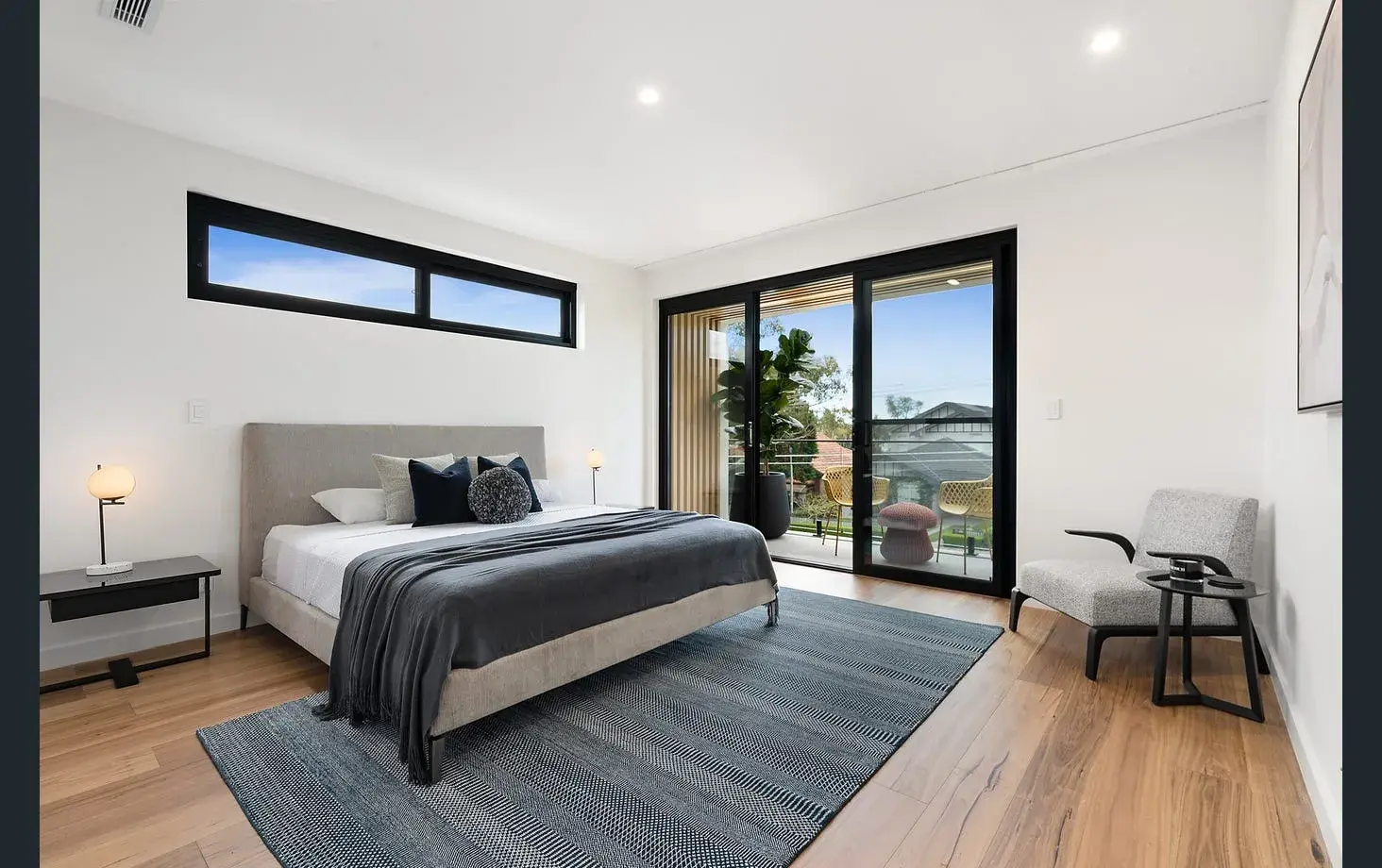
The good news is that sleep-supportive design principles work in almost any floor plan — you just apply them differently in a small bedroom than you would in a sprawling master suite.
The aim stays the same: clear circulation, low visual noise, and a bed that feels stable and easy to live with.
In small bedrooms: making tight footprints feel calm and spacious
In compact bedrooms, the goal is clarity, not more furniture. Prioritise what you touch and see every day, and let everything else earn its place.
Consider:
- Bed size and access. Choose a bed that suits the footprint and still allows access where you can. If you can’t get 45 cm on both sides, aim for one generous side and keep the other as workable as possible.
- Dual-purpose storage that reduces surface clutter. Integrated drawers, wall-mounted shelves, and built-in joinery can keep the room visually quiet. Too many small storage pieces often create more clutter, not less.
- Wall-mounted lighting and slimline bedside pieces. Sconces or pendant drops free up tabletop space and make the room feel less crowded.
- Day/night window discipline. Keep windows clear during the day for natural light and air, then control glare at night with good block-out blinds or curtains.
- If the bed must sit under a window. Use a taller, more substantial headboard plus excellent coverings to reduce draughts and light spill.
In standard or large bedrooms: stop the room from feeling “scattered”
More space can create a different problem: too many zones, too many objects, and no clear centre of gravity. If the bedroom starts to feel like a second living room, sleep quality can suffer simply because the space never fully “switches off”.
To keep it anchored:
- Make the bed the clear focal point. Place it intentionally and resist filling every wall with extra furniture.
- Create visual balance. Matching bedsides are lovely, but you can also balance with different pieces that have similar scale and weight.
- Keep stimulating zones out of sightlines. If you have a desk, exercise equipment or work storage, try to position it so it’s not the first thing you see from bed.
- Keep seating calm and purposeful. One chair and a small table can be useful; a full lounge setting often makes the bedroom feel too active.
In bedrooms with ensuite bathrooms: managing moisture, privacy and visual cohesion
Ensuites are a luxury — but they introduce moisture, extra lighting, and often more noise right next to where you sleep. A bedroom can look calm yet feel unsettled if the ensuite is bright, echoey, humid, or visually busy.
Design priorities:
- Door position and sightlines. If you can, avoid a direct line of sight from bed to toilet or shower. Even a simple re-angle of the bed or a screen can help the suite feel more private.
- Keep the bathroom door closed when not in use. It’s a simple habit that reduces light spill, noise and visual clutter.
- Ventilation and moisture control. Use a properly sized exhaust fan and, where possible, one that’s ducted to the outdoors. Persistent humidity can lead to condensation and mould — not great for comfort or long-term building health.
- Waterproofing + detailing that protects the bedroom. Wet areas need correct waterproofing and thoughtful junction detailing so moisture doesn’t migrate into adjacent rooms over time.
- Slip and maintenance reality. Choose floor finishes your household can live with (and keep dry). Ask your supplier/tiler to confirm suitability and slip rating for your specific area and use.
Cohesive materials and finishes (so the suite feels like one retreat):
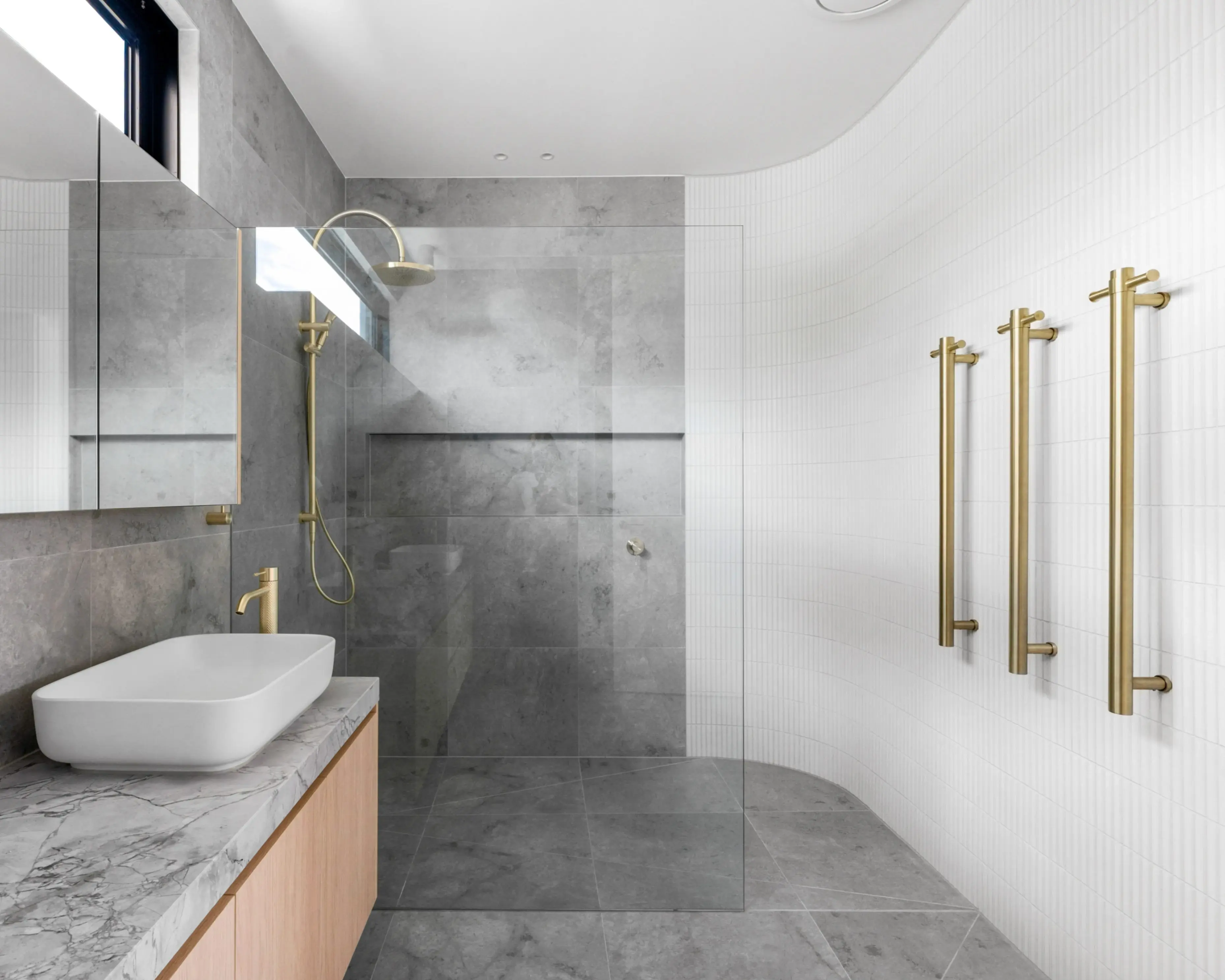
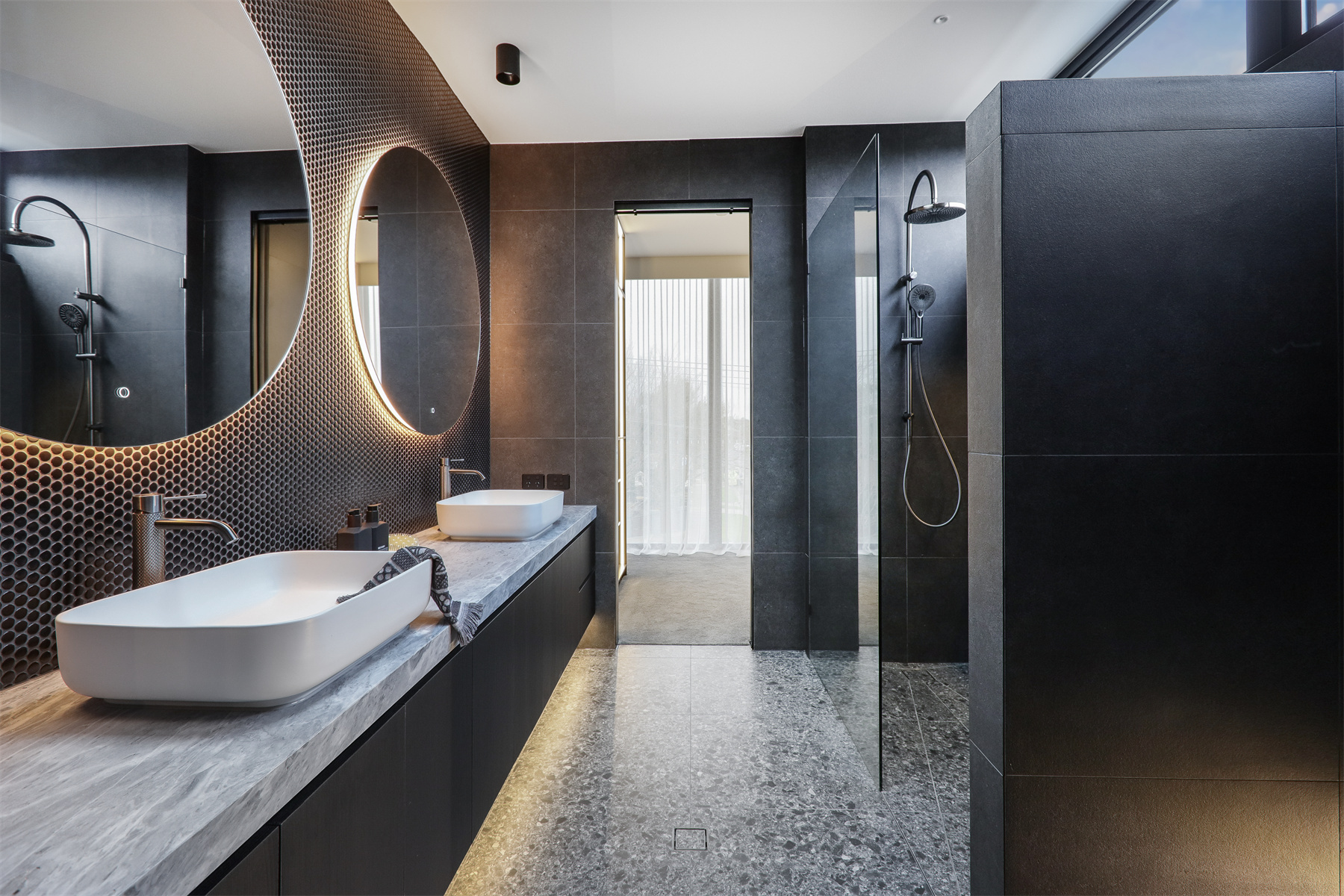
Treat the ensuite as an extension of the bedroom, not a different “personality”. Repeat one or two cues across both spaces — a timber tone, a stone tone, or a consistent metal finish — and the whole suite will feel calmer and more resolved.
Compliance Tips:
- For minimum building requirements, see NCC Part 10.6 Ventilation (requirements vary by state/territory and project; confirm locally).
- If you want the NCC reference point for condensation/moisture management, see NCC Part 10.8 Condensation management.
- Practical guide: YourHome – Ventilation and airtightness includes homeowner-friendly guidance on ducting exhaust fans to outside.
🔹Nero styling note (subtle + functional): In compact ensuites, a streamlined wall mixer and wall-hung vanity can keep more floor and benchtop visible, which reduces visual clutter and makes wipe-downs easier — especially in humid climates or busy households.
Also Read: Ensuite Bathroom Ideas: Costs, Layouts & Styling Guide
How do you choose bedroom colours and materials that feel restful at night?
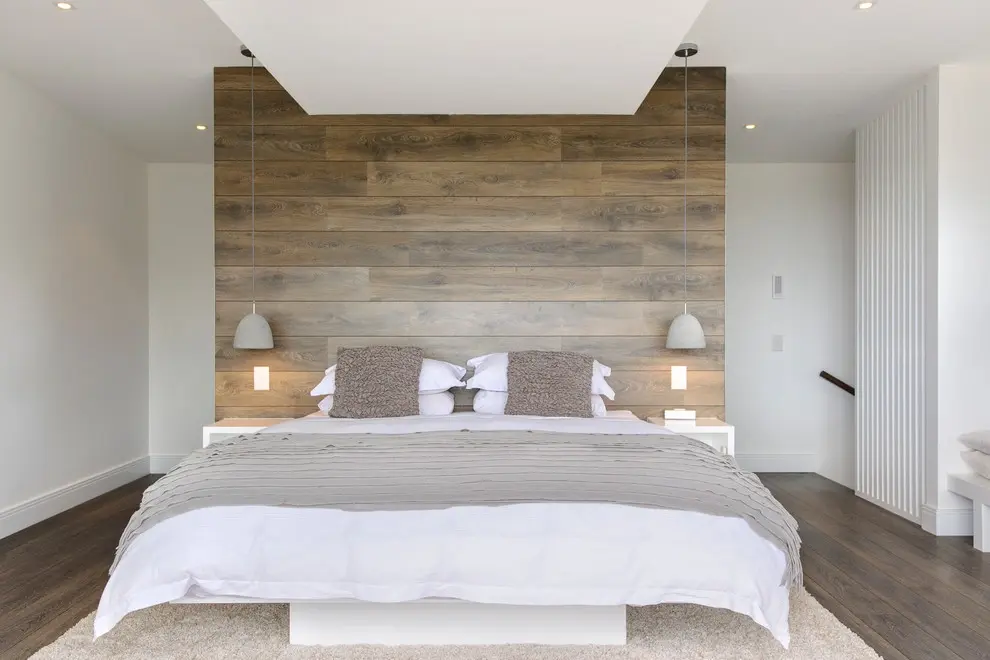
Source: Capital Building
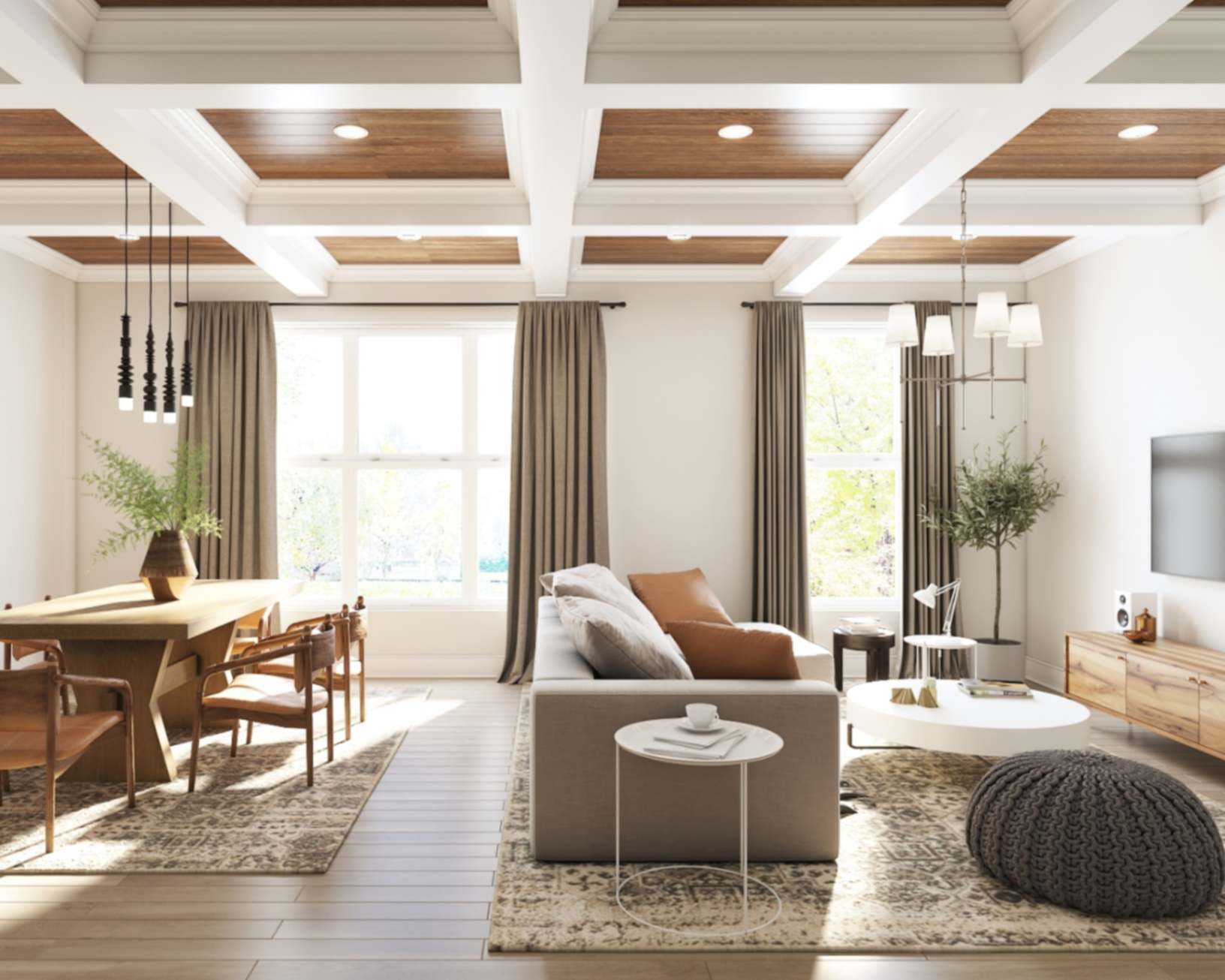
Once the bed and pathways feel settled, the next biggest ‘volume control’ is your palette and lighting.
Colour, texture and finish decide whether your bedroom feels soft and grounded — or visually “loud” and hard to switch off in.
In Australian homes, this also has a practical layer: strong daylight, warmer summers, coastal glare, and bedrooms that often sit close to an ensuite or hallway.
Restful palette profile (a practical starting point)
If you want a scheme that suits most Australian bedrooms — from coastal to inner-city — start here and adjust:
- Vibe: calm, low-contrast, softly layered
- Undertone: warm-neutral or muted (avoids that icy “clinical” feel at night)
- Reflectivity: matte or low-sheen where possible (less glare under downlights)
- Best with: timber tones, linen textures, stone-look finishes, simple joinery
- Watch-outs: very bright whites in high-glare rooms; very cool greys in low-light bedrooms; high-contrast patterns that feel busy at night
Calm vs stimulating: using colour, texture and shine with intention
For sleep-supportive design, calming choices lead and higher-stimulation accents play a supporting role.
In most bedrooms, that looks like:
Calming foundations (low stimulation)
- warm whites and soft creams
- sand, stone and light taupes
- muted greens (sage, eucalyptus)
- gentle blues (powdery, not electric)
These tones tend to read softer in lamplight and sit well with Australia’s bright daytime sun.
Higher-stimulation accents (use sparingly)
- terracotta or rust cushions
- a warm-toned artwork
- a single metal accent (lamp base, picture frame)
The key is restraint. Too much contrast or saturation can keep the room feeling mentally “active” even when it’s tidy.
Texture matters as much as colour.
Timber, cotton, linen and wool usually feel quieter than high-shine synthetics because they absorb light and soften sound. Woven rugs, linen curtains and upholstered bedheads add depth without visual noise — as long as the palette stays tight.
Australian climate note: In warmer regions, very dark walls, heavy bedding and non-breathable fabrics can trap heat. Many people find it easier to sleep when the bedroom runs slightly cooler than living areas. If your room holds heat:
- use breathable natural fibres close to the skin
- layer bedding so you can adjust overnight
- consider gentle air movement (like a ceiling fan) rather than cold air blowing directly onto the bed
Palettes for different goals: schemes for rest, romance and creativity
A bedroom isn’t one-size-fits-all. Your palette should match what you want the room to feel like at night.
For rest and recovery
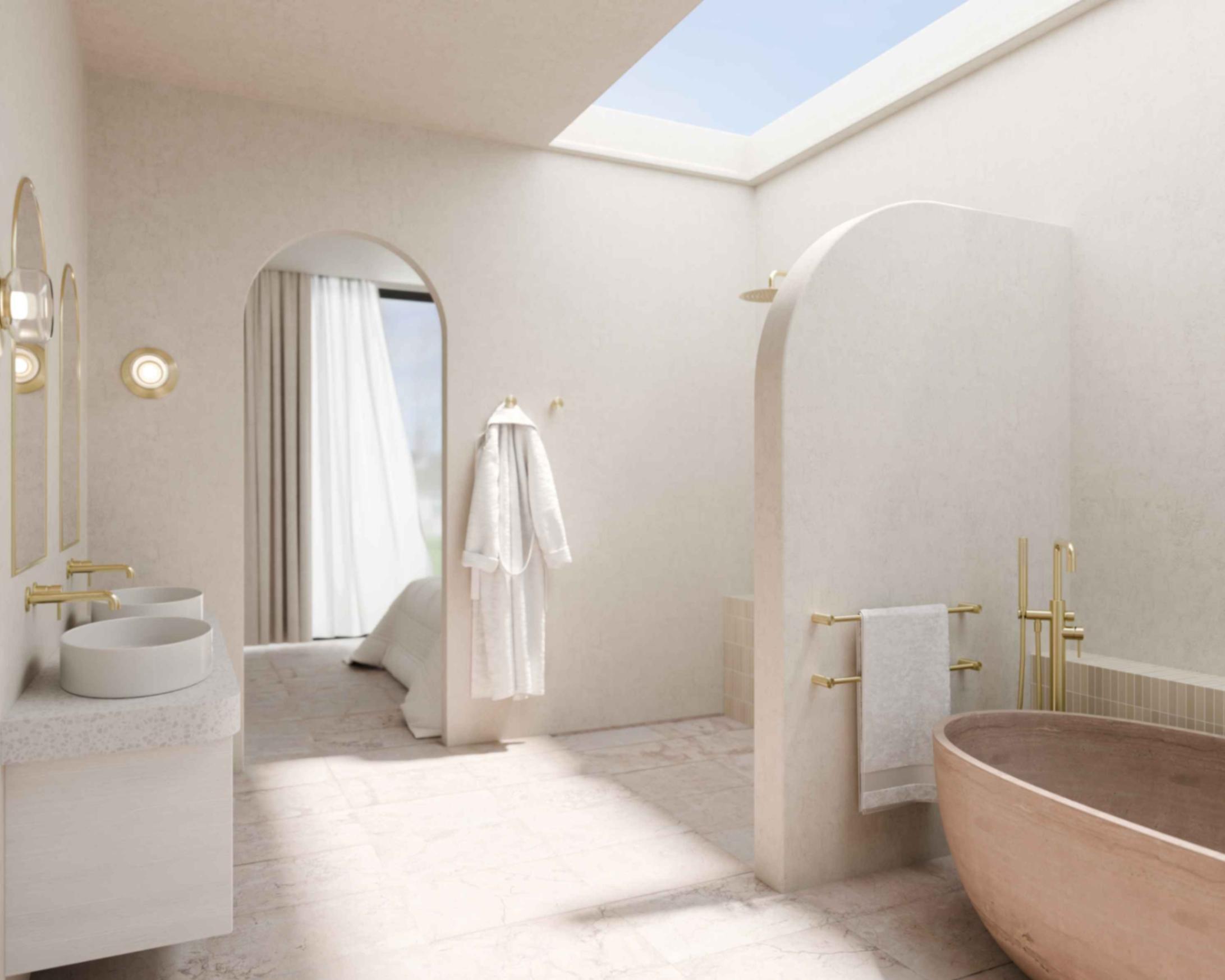
Muted greens, warm whites and soft stone tones create a calm, modern mood that suits both bedrooms and ensuites. Keep metals quiet (think softly brushed finishes) and avoid too many reflective surfaces that bounce light around.
For warmth and connection
Warm taupes, blush tones and creamy neutrals soften a room without feeling overly sweet. Balance helps: visually even bedside styling (it doesn’t have to match perfectly) tends to make the room feel more settled and considered.
For freshness and clarity (without feeling cold)
Soft blues, sea-greens and warm whites can feel light and optimistic — especially in coastal or high-light homes. Add warmth through timber, woven textures, and one or two warm accents so the room still feels inviting at night.
🔹Nero Design Tip
When you’re choosing tapware finishes for an adjoining ensuite, treat them as part of your bedroom palette rather than an afterthought:
- Brushed Nickel in a soft green scheme reads cool and spa-like
- Brushed Gold or Brushed Bronze in a warm neutral bedroom adds a gentle glow that still feels restful at night
(Related reading: a separate colour-palette guide can help you pull these schemes through the rest of your home.)
Lighting: layering warmth, softness and clarity
Lighting is one of the most powerful tools to make a bedroom feel calmer at night. It shapes how colours read, how large the room feels and how easily you wind down at night.
Rather than relying on a single bright downlight, build a gentle mix of:
- Ambient layer: soft, warm general light (ceiling light on a dimmer, a shaded pendant, or concealed strip lighting).
- Task layer: bedside lamps or wall sconces for reading, plus focused light at a dressing table if you use one.
- Accent layer (optional): a subtle strip behind a bedhead, a small lamp on a console or a low-glow night light.
Where possible:
- avoid a single harsh downlight in the centre of the ceiling
- use dimmers so light levels can drop as evening progresses
- let natural sunlight in during the day, then draw curtains or blinds at night to block street lighting and contain energy
Sleep specialists consistently recommend keeping evening light levels low, warm and indirect to support melatonin production and healthy circadian rhythms. In practice, that means:
- warm-white (not blue-white) globes for bedside lamps
- dimmers on main lights
- no bright downlights placed directly over the pillow
If you like to read in bed, choose focused task lighting that shines onto the page, not into your eyes. And consider where screens fit into the picture: phones, tablets and laptops on night mode are better than nothing, but parking them outside the bedroom altogether makes it much easier for the space to return to what it’s designed for – deep, uninterrupted rest.
Also Read: [GUIDE] Dopamine Decor & Interior Design Tips to Boost Your Mood - Nero Tapware
How to use mirrors, décor and accessories in a sleep-supportive bedroom
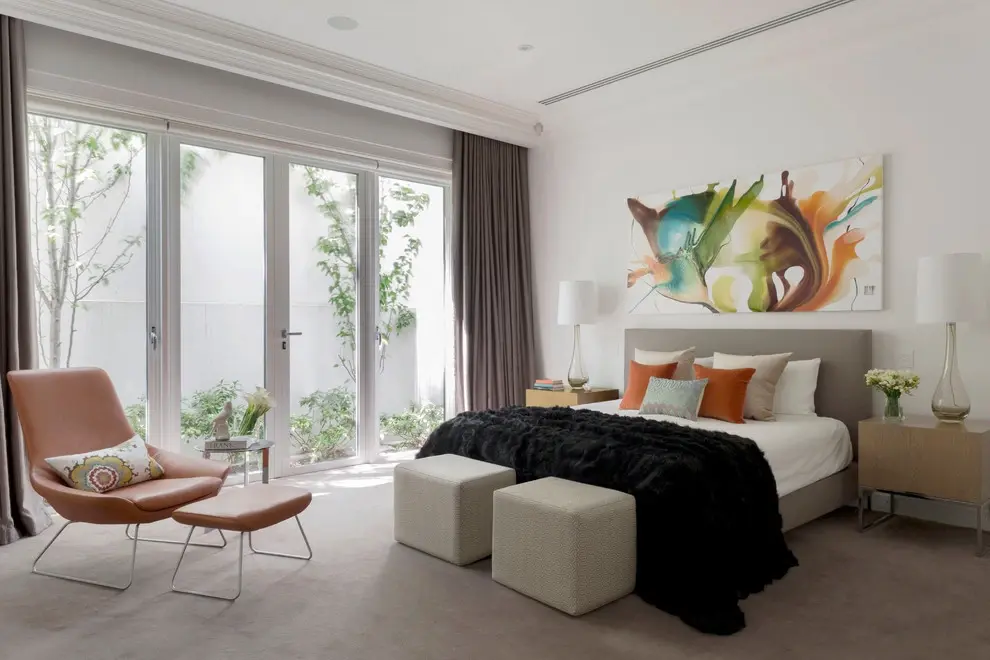
Source: Andrew Frost Interiors
The finishing layer of a calm bedroom isn’t more “stuff” — it’s better editing. Mirrors, artwork, plants, textiles and scent can make a room feel considered and cocooning, or visually noisy and hard to switch off in.
The goal is simple: less distraction, more comfort, and a space that feels resolved from bed.
Mirror placement: bounce daylight without creating night-time glare
Mirrors are useful — they brighten rooms, help with dressing, and can make small spaces feel larger. But in bedrooms, they’re best treated as functional tools rather than pure decoration.
Good mirror guidelines:
- Use mirrors to amplify daytime light, especially in darker rooms or apartments.
- Avoid placing mirrors where they bounce harsh light at night, such as reflecting a bright ensuite vanity light or a downlight into the bed area.
- If mirrored wardrobe doors dominate the room, consider how they read at night. Curtains, sliding panels or subtle film can soften the effect if the room feels too “active” after dark.
Bringing nature indoors: plants, views and natural materials
A gentle connection to nature tends to make bedrooms feel calmer — but it needs to suit your home’s ventilation and humidity.
Practical options:
- One or two hardy plants (peace lily, snake plant) placed away from the head of the bed so the area around your pillow stays dry and low-allergen.
- If plants aren’t your thing, artwork featuring landscapes, foliage or water can create a similar calming cue without adding humidity.
- Natural materials like timber, linen and woven textures usually read softer than glossy synthetics and help the room feel more grounded.
Australian humidity note: In Australian apartments or coastal homes with limited natural ventilation, be mindful not to over-cluster plants, which can raise humidity levels and encourage mould if the room is already on the damp side. One or two healthy, well-drained plants placed away from the head of the bed are usually preferable to a dense “indoor jungle” in a small bedroom.
Personal items and artwork: curate what you see from bed
Your bedroom should feel like a retreat, not a storage zone. What you see from bed is effectively the room’s “mental wallpaper”.
A calm approach:
- display a few meaningful pieces, not many small objects scattered everywhere
- keep surfaces mostly clear (especially bedside tables and dressers)
- choose artwork that supports the room’s mood — calm, not chaotic
- group small items together rather than spreading them across multiple surfaces
- keep pathways clear so the room stays easy to move through in low light
Sound and scent: small changes that shift the whole mood
Sound and scent shape how deeply you can relax in your bedroom.
- Soft textiles such as rugs, curtains and upholstered bedheads absorb sound and help create a cocooning effect – especially important if you’re on a busy street, near flight paths or in a lively townhouse development.
- In new builds or major renovations, upgrading to better-sealed doors or double-glazed windows can dramatically reduce night-time noise.
- Natural scents like lavender, sandalwood or eucalyptus can relax the nervous system when used through diffusers or candles, but keep fragrance subtle and avoid anything that triggers headaches or allergies.
- A simple white-noise machine or ceiling fan on low can also smooth out disruptive noises while you sleep.
Scenarios: Applying sleep-supportive design in realistic Australian bedrooms
The following examples are illustrative scenarios based on common Australian layouts and day-to-day constraints. They’re designed to help you picture how sleep-supportive principles can work in homes like yours — without relying on rules or “perfect” floor plans.
Scenario 1. A compact urban studio in Melbourne
At a glance
- Home type: 25 m² inner-city studio
- Mood: Calm, streamlined, light but grounded
- Key design focus: Day/night light control, visual simplicity, functional clearance
Imagine a young professional living in a 25 m² studio where the bed naturally wants to sit against two walls, and the window faces neighbouring apartments. The biggest sleep disruptors aren’t “style” problems — they’re glare, clutter, and a layout that feels cramped at night.
Sleep-supportive moves might include:
- choosing a queen bed with integrated drawers so storage doesn’t spill into the room
- swapping bulky bedside tables for floating shelves and wall-mounted lighting
- adding block-out blinds (or curtains with returns) to reduce streetlight and early morning glare
- keeping the palette tight: warm white + soft beige + muted green accents to reduce visual “noise”
Scenario 2. A family bedroom with an ensuite in Brisbane
At a glance
- Home type: Suburban family home with parents’ retreat
- Mood: Warm, sophisticated, quietly practical
- Key design focus: Clear circulation, layered lighting, ensuite humidity control
In a typical Brisbane parents’ retreat, the bedroom may sit near a hallway, with an ensuite door that catches light at night. With kids and a busy household rhythm, sleep disruptions often come from movement, noise spikes, and humidity drifting from the ensuite.
A calmer setup might look like:
- placing the bed so you have clear sightlines to the entry, without being directly aligned with it
- allowing comfortable clearance on both sides (aim for ~45 cm where possible)
- using layered, warm lighting with dimmers so the room can properly shift into wind-down mode
- treating the ensuite like part of the sleep environment: a properly sized exhaust fan, good door seals (where appropriate), and a habit of keeping the door closed when not in use
Scenario 3. A coastal retreat on the NSW south coast
At a glance
- Home type: Holiday home with ocean outlook
- Mood: Airy, relaxed, barefoot luxury
- Key design focus: Glare control, breathable layers, low-reflective finishes
Picture a coastal bedroom with big windows, strong morning light and salty air. The goal is airy and bright during the day — but genuinely dark and soothing at night.
Sleep-supportive choices might include:
- high-performance window coverings to manage early sun and reflective glare
- breathable textiles (linen, cotton) and layered bedding for changing coastal temperatures
- limiting mirrored or high-gloss surfaces that can bounce light harshly
- selecting materials that suit coastal life: easy-clean, low-sheen finishes, and hardware choices that feel robust in humid/salty conditions
🔹Nero styling note: In a coastal ensuite, choosing a cohesive, low-glare finish across fixtures and accessories can help the bathroom feel calmer (and visually less busy) while supporting an architectural, understated look.
Also Read: Japanese Zen Garden Ideas: Tranquil Design Principles for Effortless Outdoor Serenity
How can Nero Tapware support a cohesive bedroom–ensuite suite?
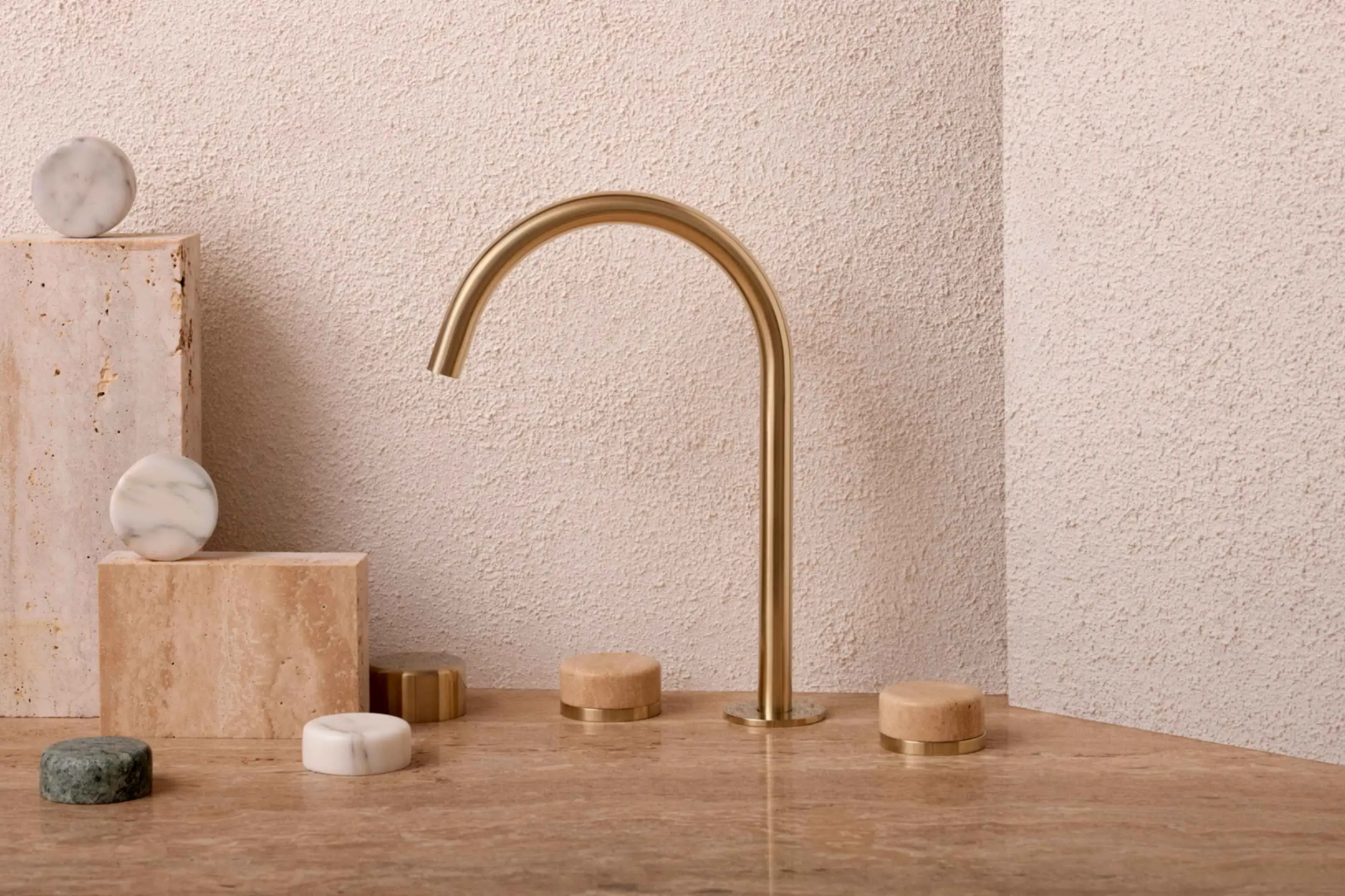
A calm bedroom–ensuite pairing is usually the result of restraint and consistency. In the bedroom, that means fewer visual distractions and softer surfaces. In the ensuite, it often means fixtures and accessories that feel architectural, easy to clean, and visually quiet — so the bathroom doesn’t become the “busy” part of the retreat.
Nero Tapware is designed in Australia for Australian homes, with collections that let you keep the suite cohesive through one considered finish family — without needing lots of different styles competing for attention.
Design moves that make an ensuite feel calmer (and easier to live with)
- Choose one finish across the wet area. Keeping basin, shower and accessories in the same finish reduces visual clutter instantly.
- Prefer streamlined silhouettes in small ensuites. Wall mixers and pared-back forms can keep benchtops and walls looking clearer (and make wipe-downs simpler).
- Tie finishes back to the bedroom palette. Treat metal finishes like jewellery for the suite: subtle, consistent, and chosen to suit your materials (timber tone, stone tone, paint colour).
- Keep storage doing the heavy lifting. Mirrored shaving cabinets and closed storage help keep toiletries off the benchtop, which makes the whole suite feel calmer from the bedroom doorway.
Finish guidance (so it reads cohesive, not “done”)
- Brushed Nickeltends to sit quietly with muted greens, soft greys and stone tones — a good choice if you want a spa-like, low-glare look.
- Brushed Gold / Brushed Bronze adds warmth without needing high contrast — useful in warm neutral bedrooms with timber and layered textiles.
- Matte Blackcan look crisp and modern, but works best when the rest of the scheme is restrained (so it feels intentional, not harsh).
🔹Nero styling note: If your ensuite is visible from the bed, treat the fixtures like part of the bedroom’s visual field. A consistent finish across mixers, rails and accessories often reads “calm and resolved” — especially under warm, dimmed lighting at night.
A practical mini-checklist for a calmer bedroom–ensuite connection
- From the bed, the ensuite view feels tidy (closed storage, clear benchtop).
- Ensuite lighting can be soft at night (or doesn’t spill harshly into the bedroom).
- Fixtures and accessories are consistent in one finish family.
- Key surfaces are easy to wipe down (less visual clutter, less maintenance friction).
- Ventilation and moisture control are treated as non-negotiable (protects comfort and the building).
Accessibility and ease of use (without changing the aesthetic)
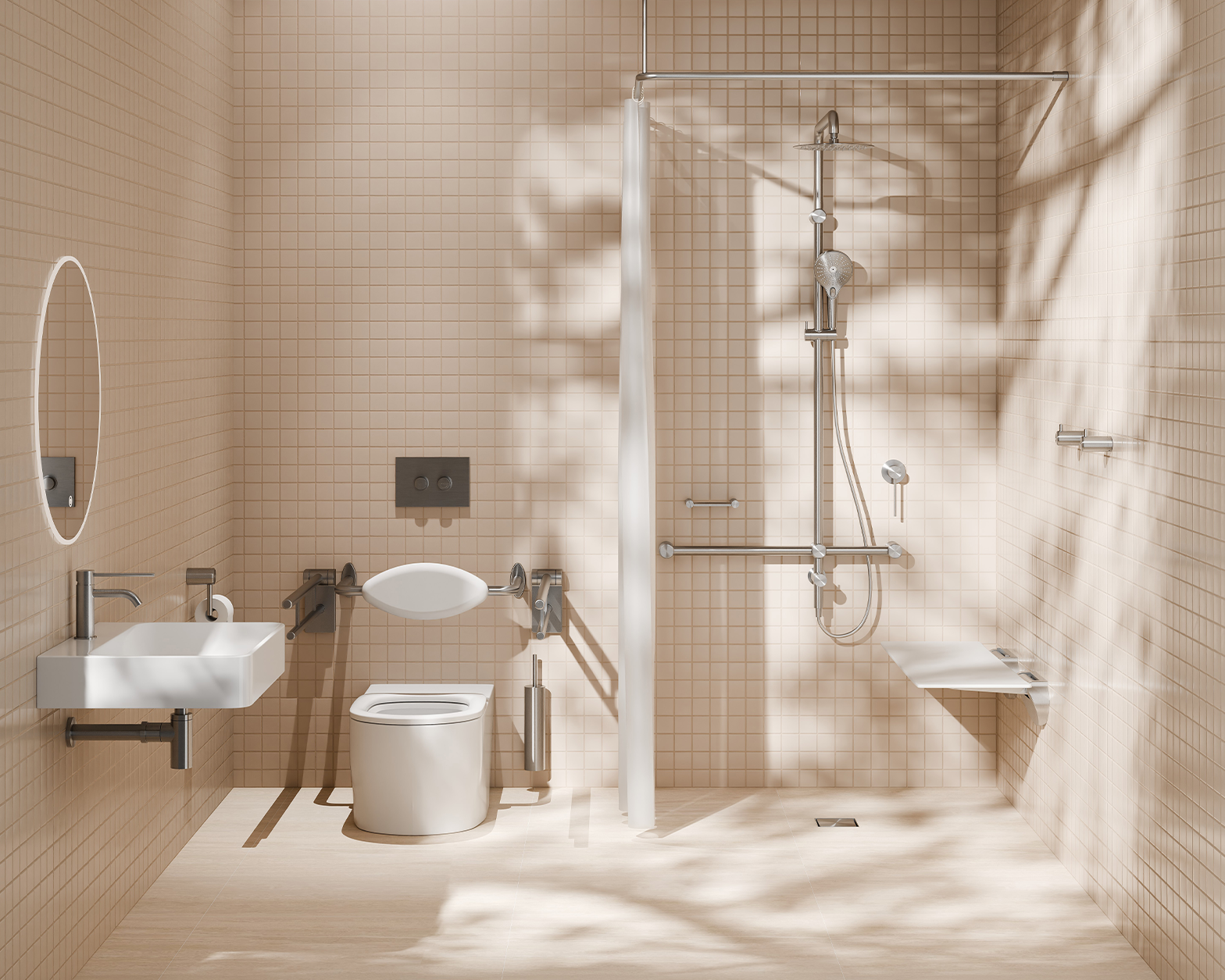
If you’re planning for long-term living — or designing a guest suite — lever-style mixer options can improve ease of use while still keeping a refined, modern look. The goal is the same: a suite that works beautifully every day, not just on reveal day.
Warranty note (Nero): Nero offers warranty coverage on eligible ranges; coverage and terms vary by product and finish. See Nero’s warranty information for full details.
Important disclaimer:This guide is general information only and does not replace professional building, design or medical advice. If you have ongoing sleep concerns, speak with a qualified health professional. Where compliance is referenced (including wet-area waterproofing and ventilation), requirements vary by state/territory and project — confirm locally with your certifier, installer and licensed trades, and always follow product instructions. Regulatory references are based on current Australian frameworks at the time of writing and may change.


![[GUIDE] House Renovation Cost in Australia | Real Prices & Budget Tips](https://nero-tapware-assets.spicyweb.net.au/main/guide-house-renovation-cost-in-australia-real-prices-budget-tips.jpeg?v=09032026064428)