Bathroom bathtub design for Australian homes: how to choose the right bath, layout, tiles & tapware
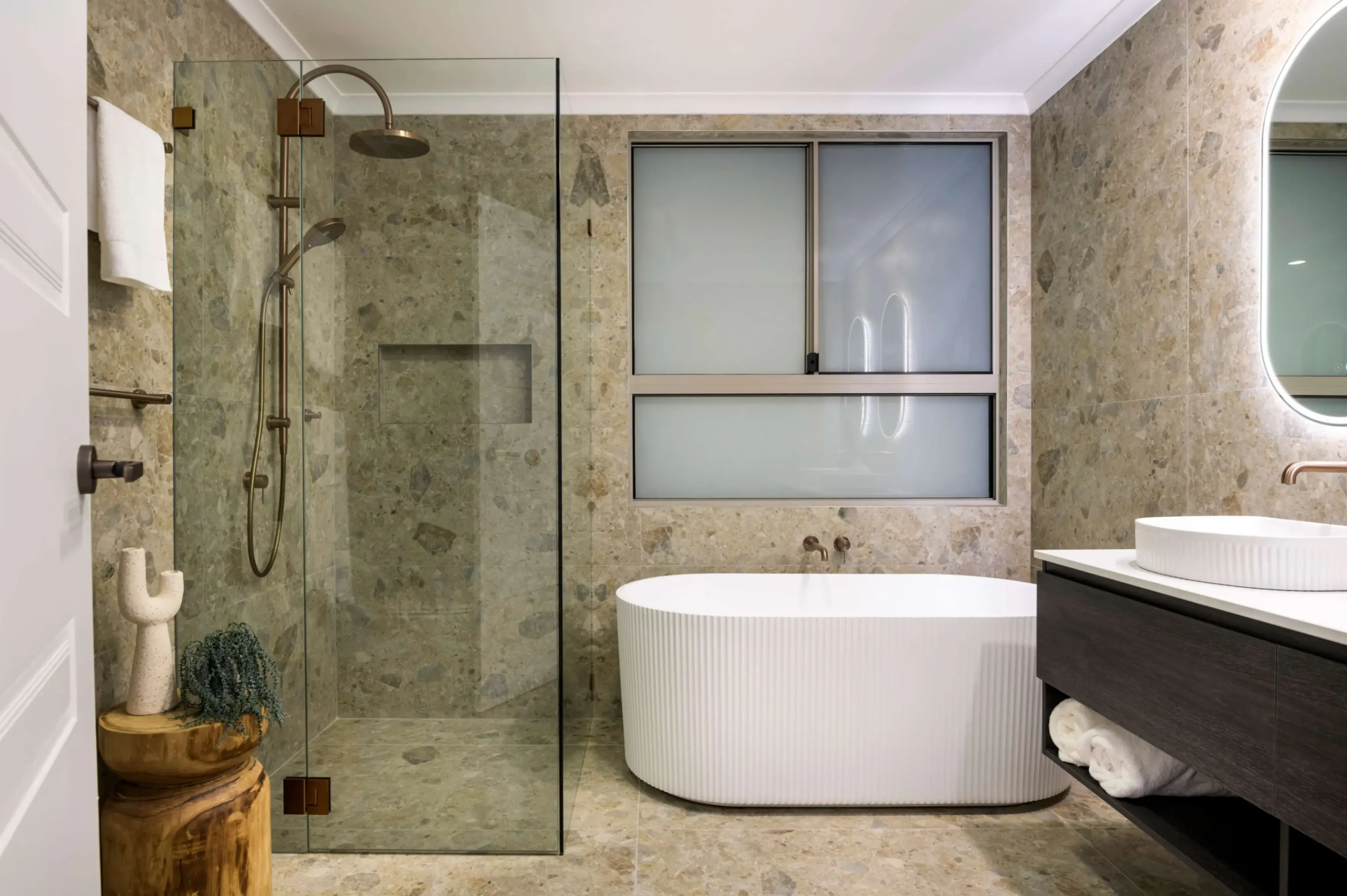
A bathtub changes the way a bathroom feels. It can be a sculptural centrepiece in a light-filled ensuite — or a practical, space-saving choice in a compact family bathroom where baths, showers, school uniforms and sandy feet all compete for room.
This bathroom bathtub design guide is written for Australian homes and Australian conditions: steamy summers, hard-water areas, coastal air, busy households and renovation realities. We’ll walk through the decisions that matter most — bath types, layouts, clearances, tile choices, tapware set-out, and the “quiet” essentials like waterproofing, ventilation and safe hot-water delivery.
Think of it as a design-minded checklist with a building-inspector backbone: realistic advice that helps you avoid expensive mistakes and end up with a bathroom that still feels good in 10+ years.
About this guide (why you can trust it)
This article is written for Australian renovations and references the consumer-facing frameworks used nationally — including the National Construction Code (NCC) 2022 Housing Provisions for wet areas and ventilation, the WELS star rating for water efficiency, and the WaterMark Certification Scheme for eligible plumbing and drainage products. Always confirm your specific requirements with your building surveyor, local council and licensed trades.
Note: This guide is general information, not legal or building advice. Always confirm your project requirements with your building surveyor, local council and licensed trades, and follow manufacturer installation instructions.
Bathroom bathtub design at a glance
- Start with how you live. A bathtub can be a daily reset, a kid-wrangling station, or a space-smart backup to a great shower. The “right” bath is the one that fits your rituals, not just your Pinterest board.
- Layout beats looks. Get the set-out right (clearances, wet/dry zoning, storage, lighting), and the bathroom will feel calm for years — even if you change towels, tiles or paint later.
- Compliance is design. Waterproofing, ventilation and safe hot-water delivery aren’t boring add-ons — they’re what protect your home from mould, movement and expensive rework.
- Choose waterwise comfort. Look for WELS-rated fittings, then design the experience (spray pattern, temperature stability, bath fill position) so saving water doesn’t feel like sacrifice.
- Finish with intent. Tapware, hardware and lighting should “join the dots” between tile, stone and timber — the finishing layer that makes the room feel considered.
One design rule that makes everything easier: Decide your “hero moment” (the bath wall, a window, or a material), then keep everything else quiet. Fewer finishes, repeated with intention, reads more high-end than a room full of features.
Start here: the 5 decisions that shape great bathroom bathtub design
Before you fall for a bath shape or a tile colour, make these five calls. They’ll keep your plan grounded — and stop the “pretty” choices from undermining comfort, storage and long-term liveability.
Decision 1 Who is the bath for — and how often will it be used?
Be honest. A bath used weekly deserves more space, better lighting, and a comfortable backrest angle. A bath used “once a year” should earn its footprint by doubling as a shower-bath or kid-friendly utility zone.
🔹Nero Design Tip: Write one sentence that describes the feeling you want: “quiet hotel calm”, “coastal daylight and texture”, or “family-proof and easy to clean”. This sentence will guide every finish choice later.
Decision 2 What layout will make the room feel effortless?
A beautiful bath that blocks circulation, steals vanity storage, or forces a cramped shower will never feel luxurious. Prioritise:
- A clear entry path (no squeezing past glass or corners).
- A defined wet zone (bath + shower grouped where possible).
- A dry zone that stays dry (vanity + storage + toilet).
- Towel reach that makes sense (within arm’s reach of bath/shower exit).
- Ventilation that clears steam quickly (so the room stays fresh day-to-day).
Decision 3 Which bath type matches your space and your tolerance for cleaning?
Freestanding is sculptural but needs room to breathe. Built-in is tidy and practical. Shower-baths are smart in small rooms. Corner baths can be brilliant — or bulky — depending on the plan.
Decision 4 What material suits your lifestyle (not just the look)?
Acrylic is warm and lightweight. Solid surface and cast stone feel premium and retain heat, but can be heavy and may need structural consideration. Cast iron is heritage-grade but demands careful floor planning.
Decision 5 How will you finish it — without visual noise?
The most cohesive bathrooms use *fewer* finishes, repeated with intention: one hero tile, one supporting tile, one metal finish, and lighting that flatters skin tones at the mirror and creates calm at the bath.
Also Read: Ensuite bathroom ideas: costs, layouts & styling guide
What does modern bathroom bathtub design look like in Australia right now?
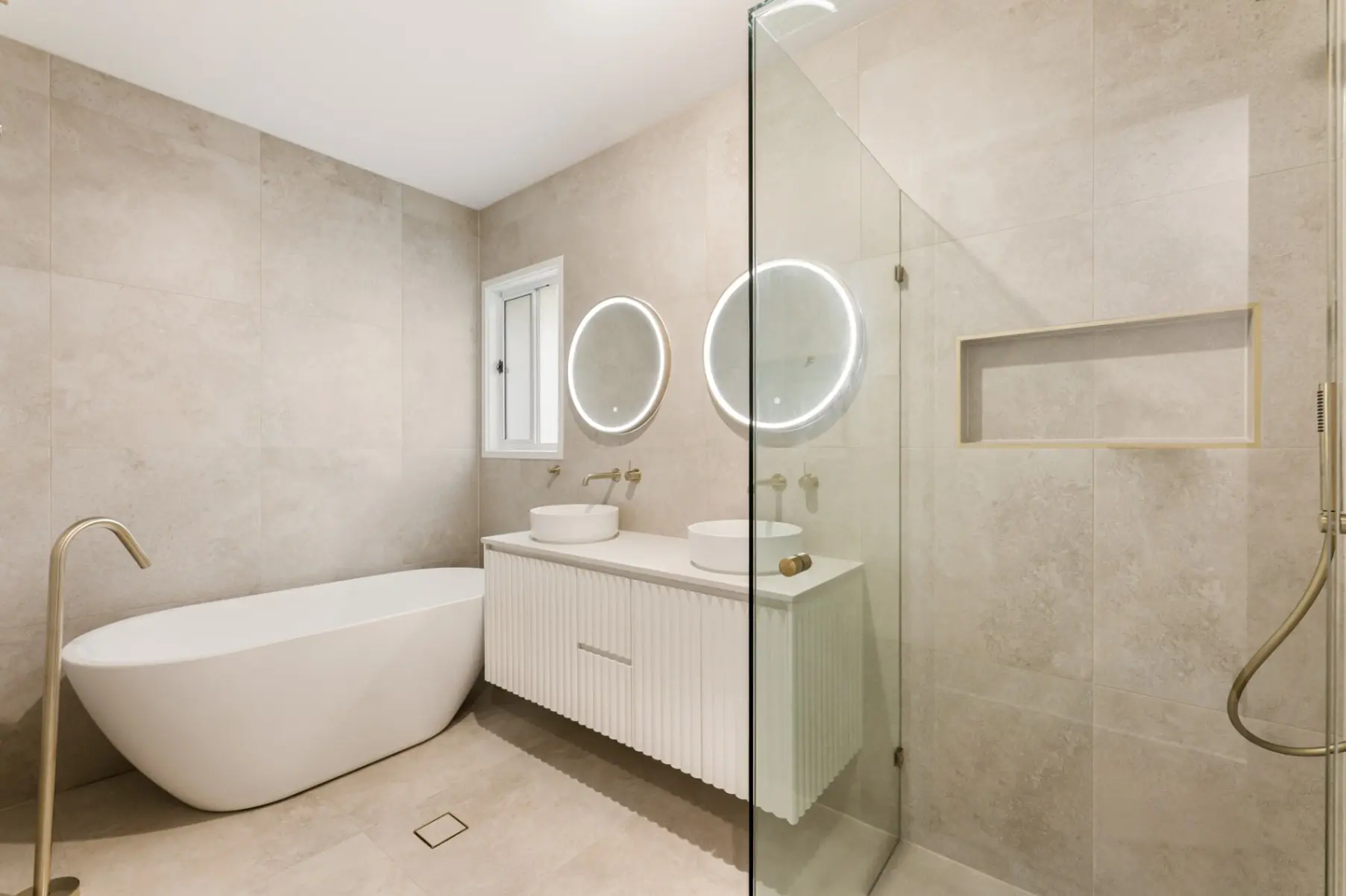
Modern Australian bathrooms aren’t about showing off — they’re about restraint. Clean lines, fewer finishes, better light, and a bath zone that feels quietly deliberate rather than decorated.
Bathtub types at a glance (what they’re best for — and what to watch)
Use this as your reality-check. The right bath isn’t just the one you love in photos — it’s the one that suits your floorplan, your cleaning tolerance, and the way your household actually uses the room.
Bath type | Best for | Watch-outs (the stuff people regret later) |
Freestanding | Master ensuites, “feature” bathrooms, relaxed resort feel | Needs clearance for cleaning; tapware set-out must be precise; some shapes are uncomfortable to recline in |
Built-in / inset | Family bathrooms, easy cleaning, more ledge space for bottles/kids | Needs well-planned waterproofing + access to plumbing; tile edge detailing matters |
Back-to-wall freestanding | The “look” of freestanding with easier cleaning | Still needs careful set-out; check the waste position and manufacturer clearances |
Shower-bath combo | Small bathrooms, one main bathroom, kid-friendly practicality | Waterproofing + screen design is non-negotiable; slip resistance matters |
Corner bath | Awkward footprints, family utility, maximising vanity/storage | Can feel bulky; deeper baths need safe entry/exit; don’t sacrifice shower size |
Why modern matters
Modern baths emphasise clean lines, minimal clutter and a seamless blend of form and function. In contemporary Australian interiors, you’ll often see matte finishes, neutral tones and natural textures.
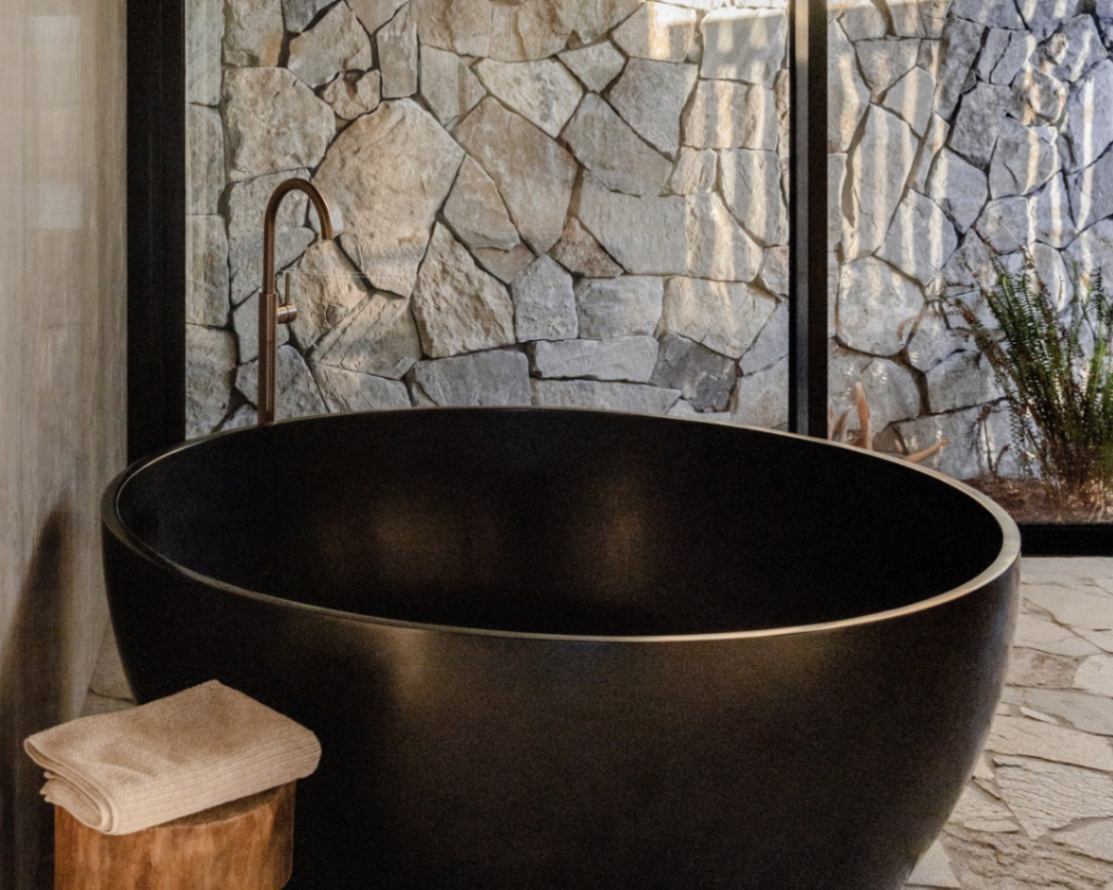
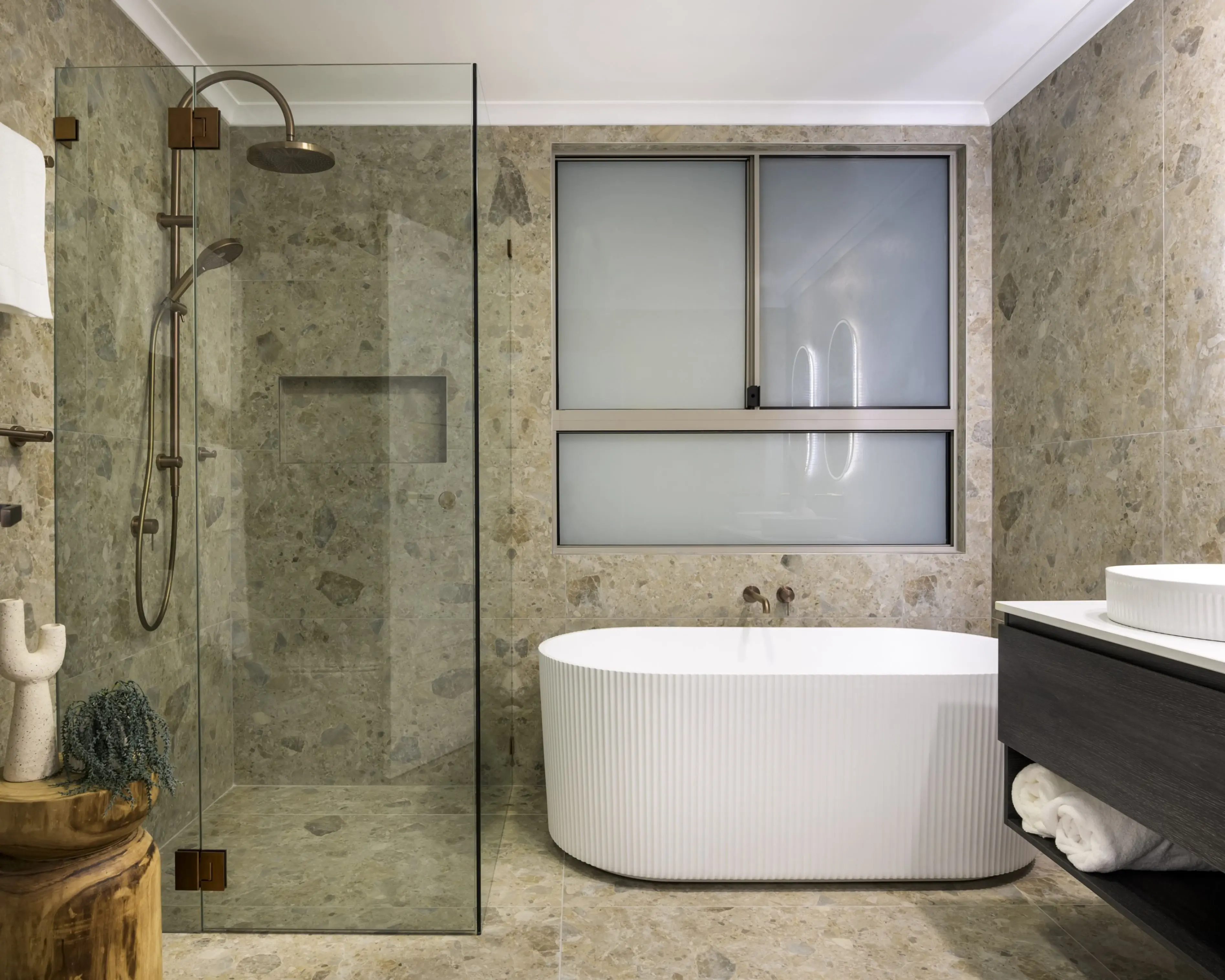
A freestanding oval bath against a textured stone backdrop creates a sculptural focal point while keeping the room light and airy. A matte white acrylic tub suits minimalist schemes and pairs beautifully with a single, consistent tapware finish — think brushed nickel or matte black — repeated across the wet zone.
Modern materials and shapes
Modern bathtubs come in diverse materials. Acrylic is lightweight and warm to the touch – perfect for families who want a durable, easy‑to‑clean option. Solid surface and cast stone baths provide a heavier, high‑end feel and retain heat longer. New composites allow for organic shapes such as egg‑shaped or asymmetric baths.
For a modern twist, consider a thin‑rimmed bath with integrated overflow. Pair it with slimline basin mixers and a matching floor‑mounted bath filler for an effortless look.
Scenario: Inner‑city sanctuary
A couple renovates a tight inner-city apartment bathroom and wants it to feel quietly indulgent, not cramped. They choose a slim solid-surface bath centred beneath a skylight, so the room reads bright and open even on grey mornings.
Large-format terrazzo runs up the bath wall to keep grout lines minimal, while brushed gold tapware adds a warm, architectural outline. A heated towel rail and concealed storage do the unglamorous work — clearing the visual noise that makes small spaces feel busy.
The end result is compact, but it lands like a retreat: clean lines, soft light, and a bath zone that feels intentional rather than “made to fit”.
Also Read: 26 Minimalist Bathroom Ideas, Design, & Decor
How do you create a master bathroom bathtub design that feels like a retreat?
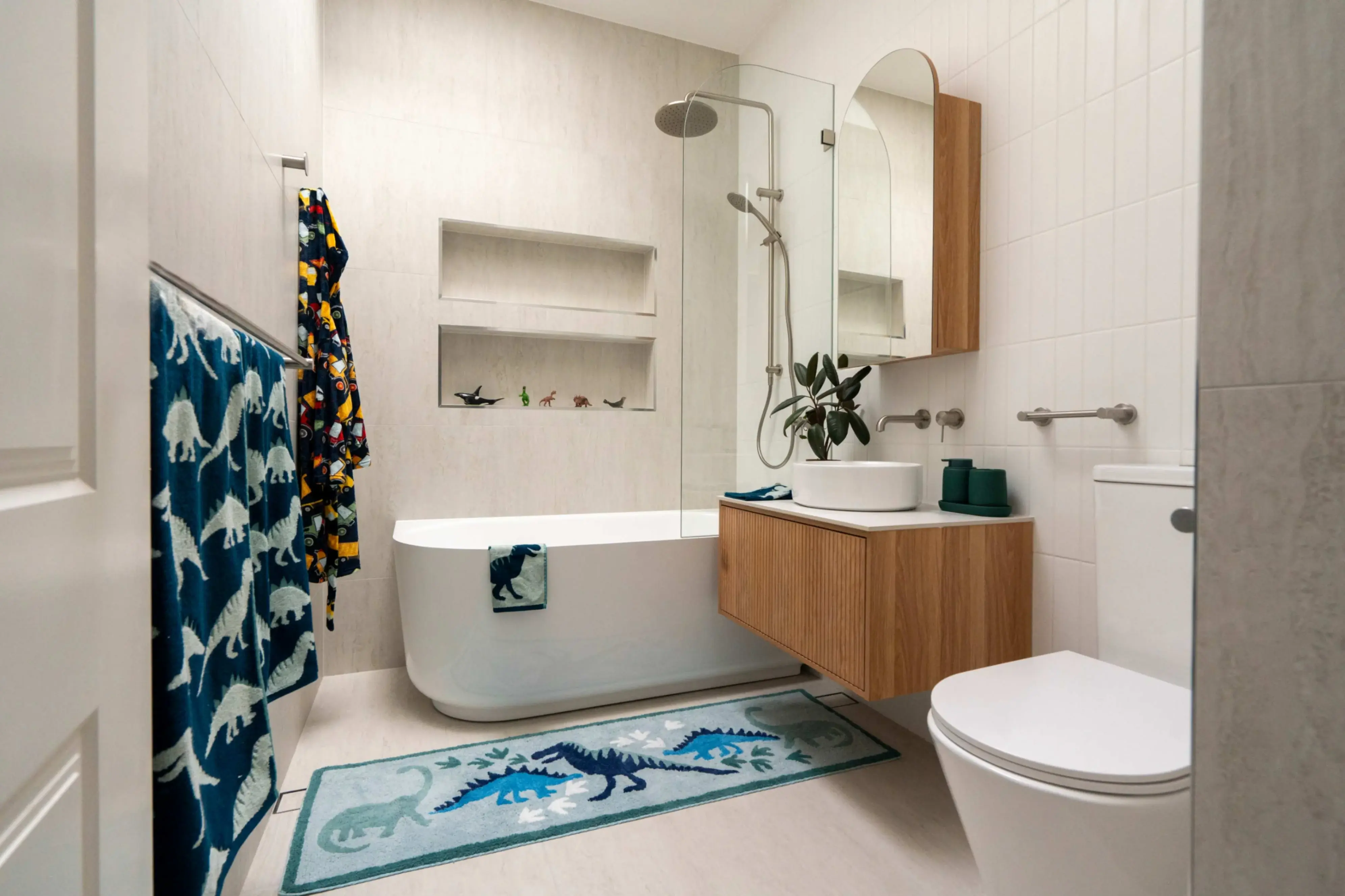
A master bath is where the room can finally exhale. With a little space to work with, you can design a bath zone that feels like a pause — not a corner you squeeze past on the way to the shower.
The indulgence zone: light, views, and a bath that earns its footprint
A master bathroom often has the luxury of space. Here, the bath can be a statement feature – a generous freestanding tub beneath a window, a built‑in tub with a generous deck for candles and plants, or a sunken bath for a resort feel.
Consider the views: looking out to a garden or courtyard enhances relaxation. In high‑ceilinged rooms, pendant lighting above the bath creates drama without cluttering the space.
Layout with intention: breathing room, balance, and the effortless set-out
Start by mapping the circulation path.
In a larger bathroom, the bath doesn’t need to be pushed against the wall; floating it away from the walls creates breathing space. If you’re pairing a bath with a separate shower, keep at least 900 mm of walking space between them for comfortable movement.
A double vanity on the opposite wall balances the composition. Use Nero’s Zen collection’s floor‑standing mixers to complement a freestanding bath and a wall‑mounted spout for built‑in designs.
Scenario: Rural retreat — where the landscape becomes the artwork
A family builds a new home on acreage and lets the view do the decorating. In the master ensuite, a round stone bath sits near floor-to-ceiling glazing, positioned so you soak towards the horizon.
The tub’s organic curve mirrors the rolling hills outside, while warm timber joinery brings the room back to earth. Brushed bronze fixtures from Nero’s Bianca collection add a quiet warmth through the wet zone — refined, not showy.
To protect the sense of openness, the rain shower and toilet are tucked behind a low partition. From the doorway, the bath and the landscape stay the hero.
If you’re designing the ensuite and bedroom as one calm, cohesive suite, our master bedroom ideas blog covers the comfort moves that make the whole space feel intentional.
Also Read: Master Bedroom Ideas: 60 Expert Tips for Style, Comfort & Function
Can a small bathroom with a bathtub design still feel spacious?
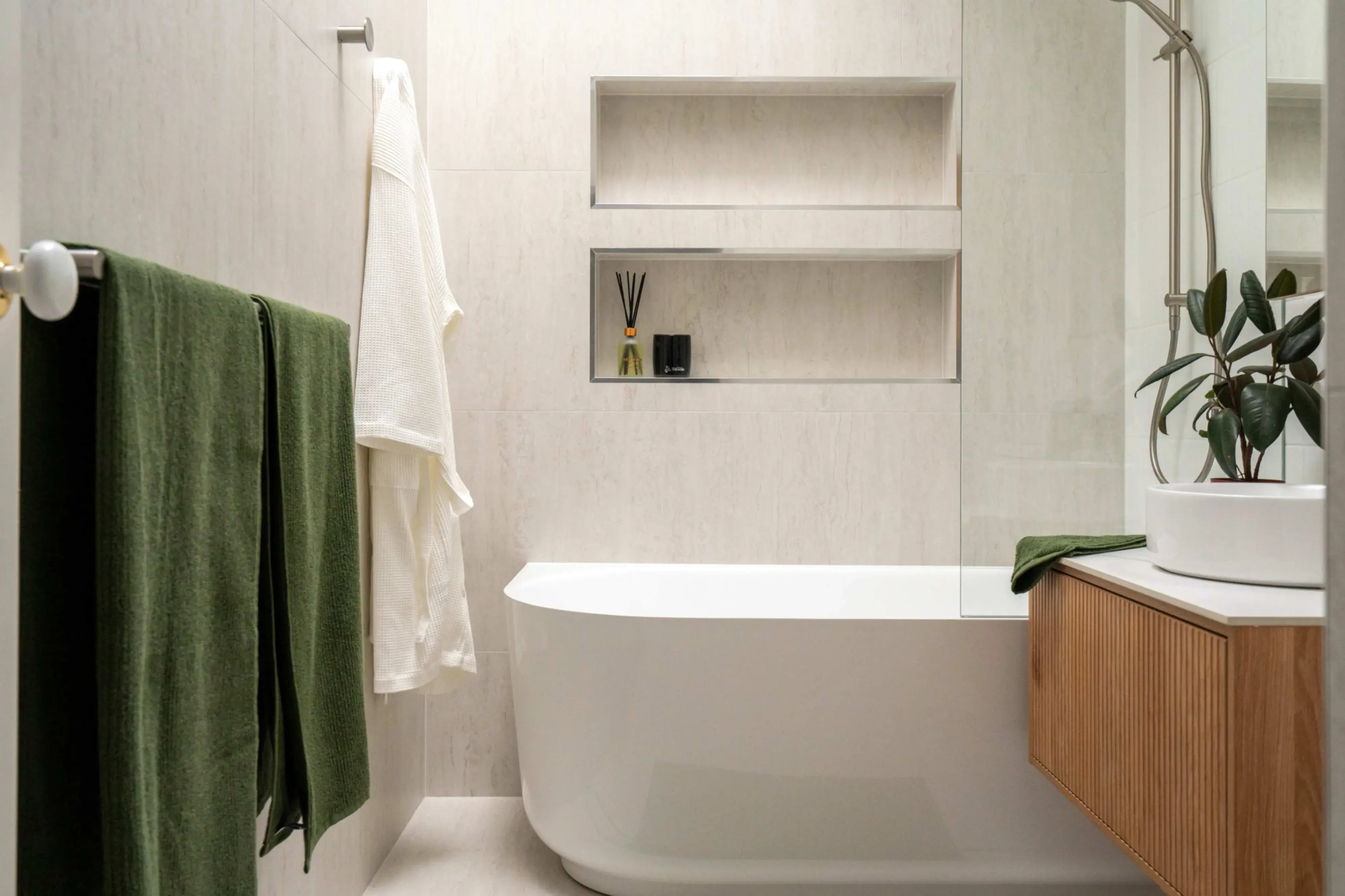
Yes — but small bathrooms reward discipline. When every millimetre matters, the best designs prioritise clear movement, smart storage, and a wet zone that doesn’t spill into everything else.
Clever small-space layouts that make a bathroom feel bigger than it is
Designing a small bathroom with a bathtub can be challenging but rewarding. A well-planned layout can make even a compact bathroom feel spacious:
- Rethinking fixture placement – like choosing a wall‑hung vanity or a back‑to‑wall toilet – frees up floor area.
- Sliding or pocket doors save swinging space.
- Remember that a bathtub isn’t always full sized; there are compact 1400 mm or 1500 mm baths that suit small rooms without compromising comfort.
When you need both: small bathroom with bath and shower layout
If you need both a bath and shower in a tiny room, opt for a shower‑bath combination.
- Install a shower over the tub with a fixed or hinged screen to prevent water splash.
- If you’re running a shower over the bath, the screen choice changes the waterproofing conversation.
When a shower is effectively unenclosed (for example, no screen), the waterproofing extent typically increases — meaning more wall and floor area needs to be treated as part of the wet zone. In plain English: fewer shortcuts, more careful detailing. Always confirm the required wet-area extent and set-out with your waterproofer/building surveyor and the relevant product installation instructions for your exact shower configuration.
Important Note: Rules depend on the NCC/AS 3740 details and your state’s regulator guidance. Always confirm the exact wet-area extent with your waterproofer/building surveyor and the relevant product instructions.
Choose a slimline tub to maximise floor space and include niches for shampoo bottles to avoid clutter. Wall‑mounted mixers from the Pure collection keep sightlines clean.
Scenario: A 2.5 m × 2 m ensuite that still feels like a breath of space
In a 2.5 m × 2 m ensuite, a young professional wants the room to feel light and unfussy — more “morning reset” than “squeezed-in afterthought”. The layout starts with a 1500 mm back-to-wall bath paired with a frameless glass panel, so the wet zone stays contained without visually chopping up the space.
A wall-hung vanity keeps the floor line open, while a mirrored cabinet quietly doubles the storage and bounces light back into the room. Bright white tiles do the heavy lifting for clarity, and a small mosaic behind the bath adds texture without tipping the room into visual noise.
To keep the wall simple, Nero’s Opal Progressive mixer runs both bath and shower from one refined control point — fewer elements, cleaner sightlines, and a bathroom that feels considered despite the compact footprint.
Also Read: 70+ Small Bathroom Ideas for Luxe Australian Homes (Space-Savvy & Stylish)
How do you plan a bathroom layout with bath and shower (without splashes and clutter)?
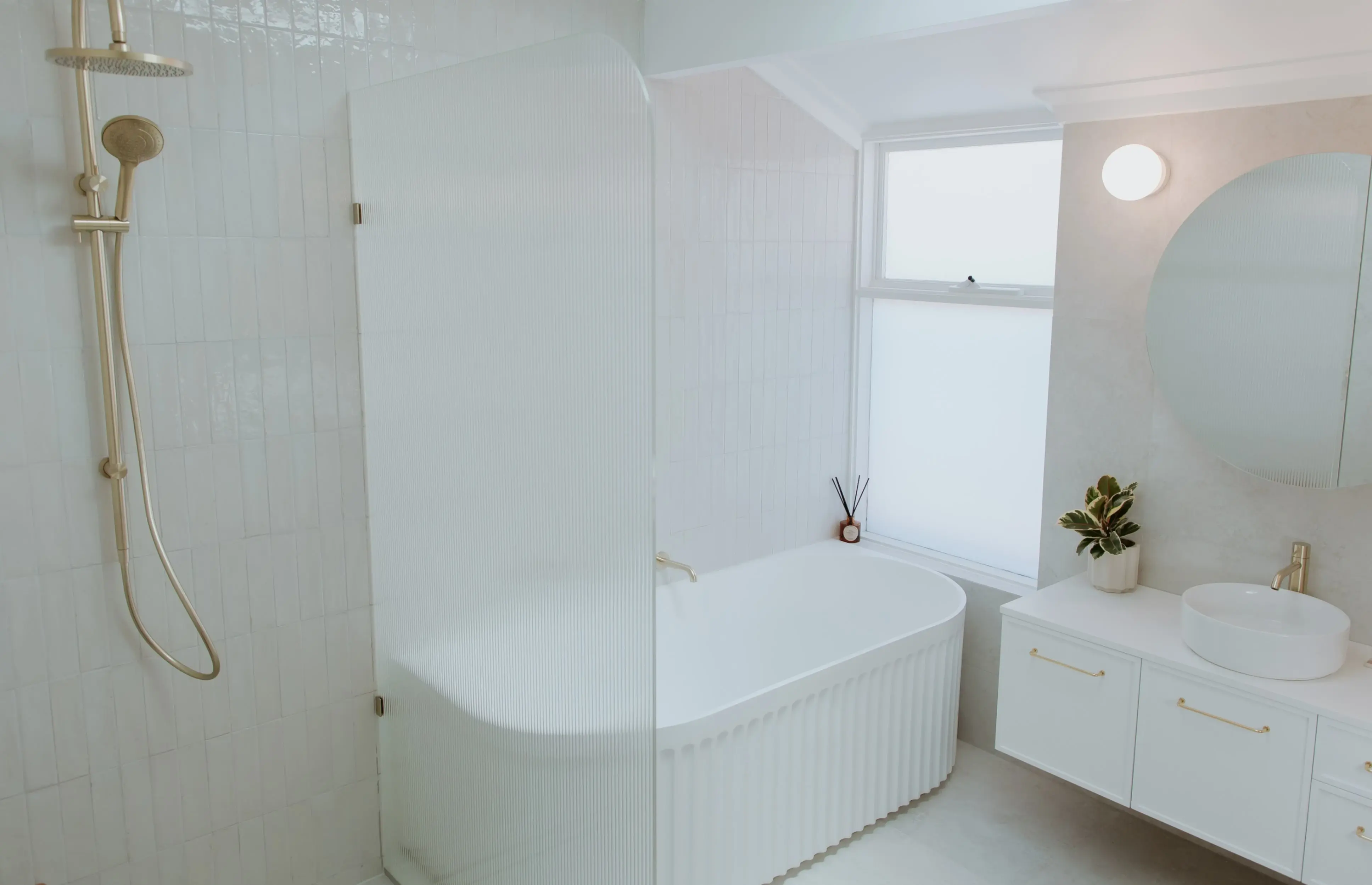
This is where most bathrooms win or lose their calm. Get the wet zone right — bath, shower, screens, drainage and towel reach — and the whole room becomes easier to use (and easier to keep dry).
Zone it like a pro: keeping wet and dry in their place
An efficient bathroom divides wet and dry areas:
- Keep the bath and shower together to centralise waterproofing and drainage, and position the vanity and toilet in the dry zone.
- In larger rooms, you may separate them with a low wall or screen.
- Always maintain clear circulation paths so there’s no awkward squeezing between fixtures.
Bath set-out secrets: sizes, clearances, and the mistakes that cost the most to fix
Set-out is the difference between a bathroom that photographs well and one that works effortlessly. A few early measurements — and a little honesty about how you move — prevents the kind of “why does this feel tight?” regret later.
1 The clearances that make stepping out feel easy (not awkward)
A bath only feels luxurious when you can move around it without thinking. Use these as practical planning guides, then confirm with your bath manufacturer and trades.
Aim for:
- Circulation that feels natural (no sideways shuffling past wet glass).
- A safe step-out zone (especially for kids or older family).
- Cleaning access where it counts (behind screens, around freestanding baths, along tile joins).
- Towel storage within one or two steps of the bath.
2 Don’t forget weight (especially with stone or cast-iron)
Premium baths can be heavy, and the weight increases dramatically once filled with water. If you’re placing a heavier bath on an upper floor or an older timber frame, ask your builder whether structural confirmation is needed before you fall in love with a specific model.
Builder’s Tip: The best time to solve “weight + waste position + set-out” is before waterproofing begins — not after tiles arrive.
Choosing a bathtub shower combination design: 3 layouts that actually work
Combination designs come in several forms:
- Shower over bath – Ideal for small bathrooms; include a quality screen to contain splashes. Use slip-resistant flooring and waterproof the relevant wall areas to the NCC / AS 3740 wet-area extent for your shower configuration (often up to 1800 mm in the shower splash zone), and follow the bath/screen manufacturer instructions.
- Adjacent bath and shower – For medium‑sized rooms. Install the shower next to the bath and separate them with a frameless panel. This layout simplifies plumbing and allows a generous shower while still enjoying a full‑size bath.
- Wet room – A continuous, fully tiled space without a screen, where the bath and shower share the same floor. This requires full waterproofing and careful floor grading. Where a floor waste is installed, the NCC sets minimum/maximum continuous falls so water drains properly (and you don’t end up with puddles that never quite dry). It suits contemporary or minimalist homes and makes cleaning easy.
The family-proof layout: bathroom design with separate bathtub and shower
In family bathrooms, a separate bath and shower is ideal:
- Keep at least 900 mm clearance between the two for safe movement. Provide a bench or ledge near the bath for towels and candles.
- Choose tapware that coordinates across fixtures such as wall‑mounted spouts and matching shower mixers in finishes like gunmetal or brushed gold.
Choose WELS-rated fittings where applicable, then focus on experience: temperature stability, comfortable spray, and a bath fill position that doesn’t splash. For instance, a WELS-rated showerhead can save up to around 20,000 L a yearin some households, depending on your current shower flow rate and how you use it.
What bathtub tile design ideas work best for your bathroom (style, cleaning, and slip resistance)?
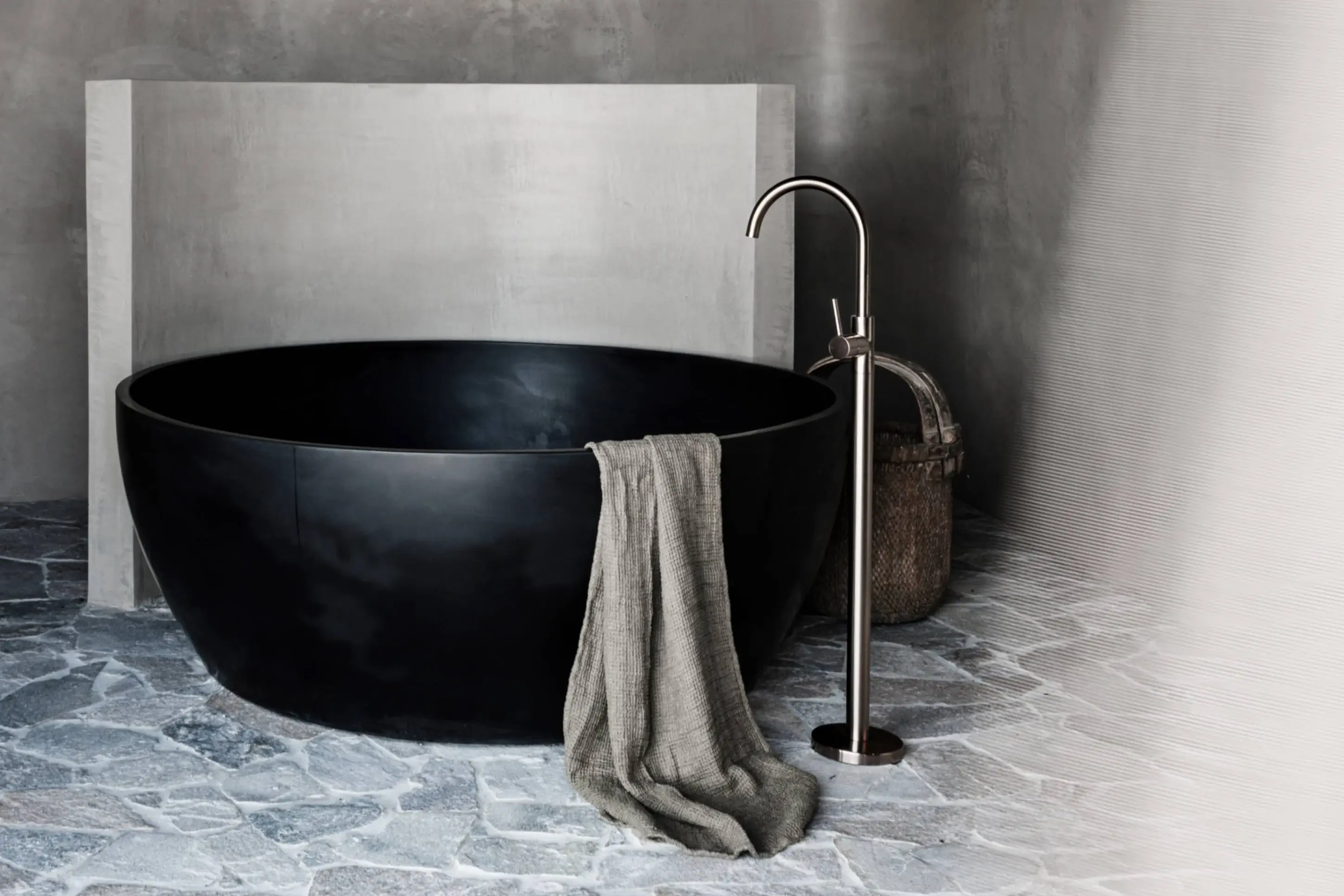
Tiles do more than set the mood. Around a bath, they’re working hard: managing moisture, supporting grip underfoot, and deciding whether the room reads crisp and calm — or busy and high-maintenance.
Which tiles suit a bathtub zone best (stone-look, terrazzo, kit-kat, and more)?
Tiles around the bath protect walls and floors from water while adding personality. For a spa feel choose natural stone or stone‑look porcelain in soft greys or warm beiges. Large‑format tiles reduce grout lines and make small spaces appear larger. In contrast, handmade or kit‑kat tiles introduce texture and colour; use them as a feature wall behind the bath.
For bathroom floors, choose a surface with a verified slip-resistance classification and ask your tile supplier which option suits a wet, barefoot environment. If you’re unsure, your builder/tiler can advise based on the relevant test classifications (for example, slip resistance testing and classification under Australian Standards for pedestrian surfaces).
Need help with choosing bathroom tiles? Our tips on how to choose bathroom tiles might be able to help you.
How do you use pattern and colour without making the room feel busy?
Pattern is powerful — treat it like seasoning, not the whole meal. A thoughtful layout can stretch a room visually, soften hard lines, and make the bath wall feel like a designed moment rather than just “more tile”.
- Vertical stacks lengthen the room, ideal behind a freestanding bath.
- Herringbone or chevron adds movement and works well on bath skirts or feature walls.
- Two-tone schemes (light walls + darker floor) ground the space without clutter.
Consider pairing cool‑toned tiles with brushed nickel or gun metal finishes, or warm‑toned tiles with brushed gold or brushed bronze tapware. Cohesion matters more than quantity.
We also have a guide on bathroom tile ideas to help you enhance your space that you might want to read.
What smart corner bath ideas for small bathrooms (that don’t feel bulky) can you do?
Corner baths make good use of awkward layouts and can free up floor space for a larger vanity or extra storage. Choose between triangular corner baths and offset corner baths (with one long side and one short side).
Install shelving or recessed niches above the bath for essentials. Because corner baths are deeper than standard baths, incorporate a step for safe entry and exit. Pair with a wall‑mounted mixer and spout from the Classic collection for a timeless look.
Is a freestanding bathtub right for your bathroom (or will it be hard to live with)?
A freestanding bath is a statement — but the best ones are also easy to live with. Before you commit, check the clearances for cleaning, confirm the waste position early, and make sure the shape is genuinely comfortable to recline in (not just beautiful in photos).
Why choose a freestanding bath?
Freestanding tubs are sculptural and draw the eye, turning your bathroom into a sanctuary. They work best where you can walk around them or at least see them fully from the doorway. Because they don’t require a built‑in hob, they offer flexibility in placement and can be relocated more easily during future renovations.
Bathtub materials and finishes
The material changes everything: heat retention, surface feel, sound, and even how forgiving the bath is day-to-day. Choose with your lifestyle in mind — not just the look you want on launch day.
- Acrylic – Lightweight, warm and available in many shapes. Look for double‑skinned tubs for better insulation.
- Solid surface or stone composite – Durable with a smooth matte finish; holds heat well but can be heavy.
- Cast iron – Traditional and incredibly durable. These baths retain heat but require strong floor framing.
- Metallic finishes – Brass or copper tubs develop beautiful patinas and add richness to heritage or eclectic spaces.
Match your freestanding bath with a floor‑mounted bath filler. Nero’s Opalfreestanding bath mixer and hand shower kit in brushed gold or brushed bronze can be a subtle yet elegant statement.
Also Read: [Complete Guide] Bathroom Vanity Ideas for Aussie Homes | Modern & Eco-Conscious Designs
Tapware planning for bathtubs: the set-out details that make it feel high-end
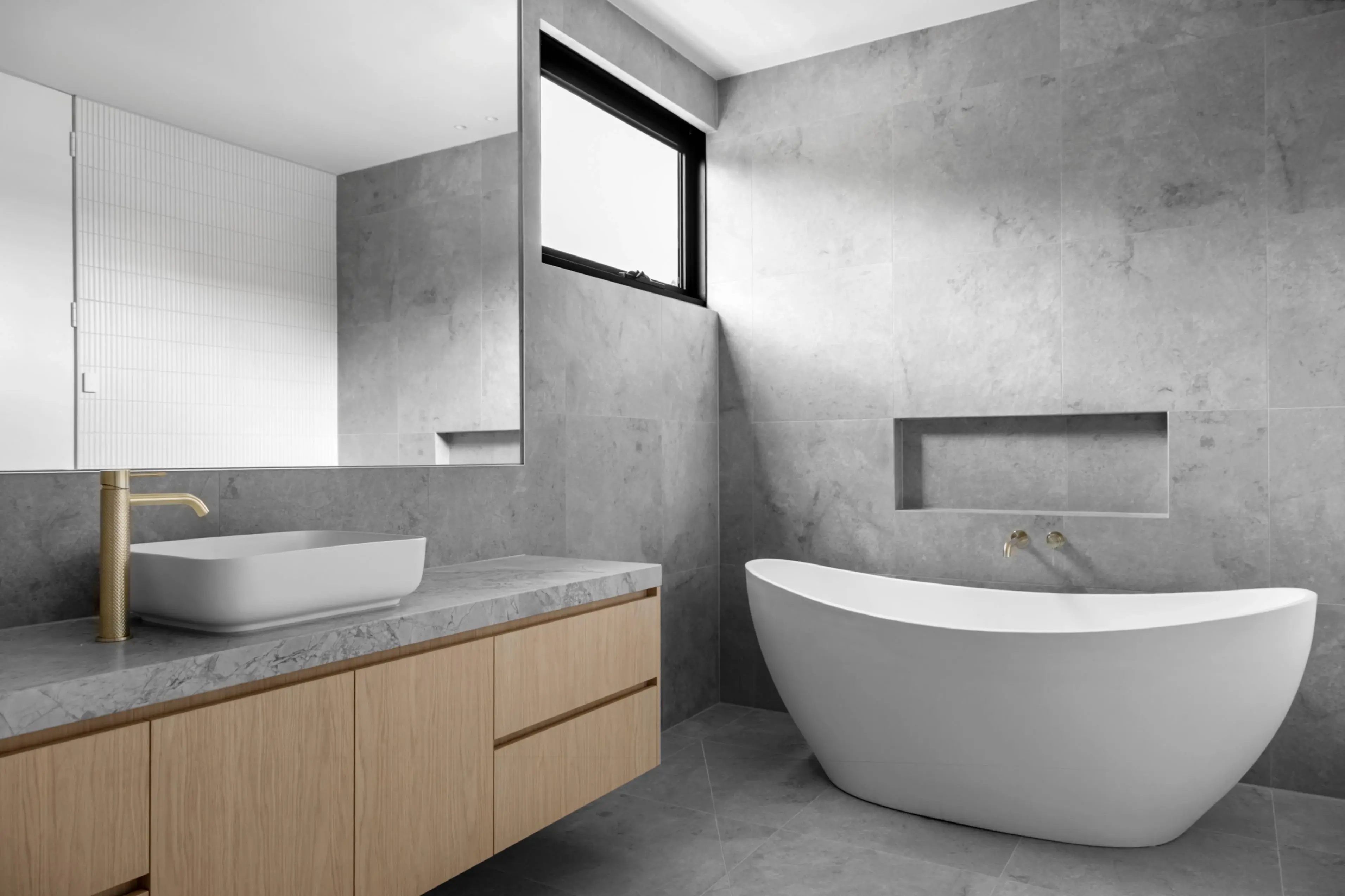
Beautiful bathroom bathtub design often falls apart at the tapware stage — not because the product is wrong, but because the set-out is rushed. Plan the tapware early, alongside bath choice and tile layout, so the “water moment” feels intentional.
Choose your bath “water moment”
- Floor-mounted bath filler: sculptural and clean, ideal for freestanding baths. Needs precise placement so the spout reaches the bath comfortably without splashing.
- Wall-mounted spout: streamlined for built-in baths and reduces visual clutter. Set-out must suit the bath rim/deck and your tile layout.
- Bath/shower mixer combo: smart for small bathrooms — one control point, less hardware, fewer visual interruptions.
Two pro checks before rough-in
- Spout reach + splash: A spout that’s too short forces water to hit the rim (noise + splash). Too long can create messy overspray. Use the bath’s internal geometry, not just the brochure image.
- Serviceability: Concealed plumbing is beautiful — but only if future access is considered. Ask your plumber how the installation will be serviced later.
🔹Nero Design Tip: Pick one finish for the whole wet zone (bath + shower + accessories) so the room reads as intentional. Nero’s collections are designed to coordinate across mixers, spouts, showers and accessories — the “finishing layer” once your layout and tile palette are locked.
How do you design a safe, accessible bathroom with a bathtub (for now and later)?
The most luxurious bathrooms are the ones you can use confidently. A few subtle choices — grip, clear movement, safe temperatures and smart hardware — can future-proof the room without making it feel clinical.
Universal access
Designing for all ages and abilities ensures your bathroom is comfortable for years to come. Opt for baths with lower sides or built‑in steps for easier entry. Grab rails and non‑slip finishes are essential in shower‑bath combinations. Consider a walk‑in or rise‑and‑fall tub if accessibility is a priority. Nero’s Mecca Care range offers lever handles and ergonomic mixers suited to care settings.
What does compliant waterproofing and ventilation look like in Australia?
Think of this as the part that protects your home. Great bathroom bathtub design isn’t only about finishes — it’s about keeping moisture where it belongs.
Compliance Check (the non-negotiables)
The National Construction Code (NCC) includes Deemed-to-Satisfy provisions for wet areas in houses. In plain English, key ideas include:
- Shower areas are treated as a true wet zone. The NCC requires shower area floors to be waterproofed, and shower area walls to be waterproofed to a specified minimum height.
- Falls matter where a floor waste is installed. The NCC sets requirements for how floors fall to the waste so water drains properly (and you don’t end up with puddles that never quite dry). Your waterproofer/tiler will confirm the correct falls for your layout and waste position.
- Unenclosed showers need a clear “extent.” For unenclosed showers, the NCC requires a waterstop a minimum horizontal distance of 1500 mm from the shower rose.
- Bath junction details aren’t optional for built-in baths. For baths and spas (except freestanding), the NCC includes requirements such as an upturn lip and being recessed into the wall, with wall substrate passing down inside the lip.
- Niches and penetrations must be waterproofed properly. The NCC also calls out waterproofing of penetrations and recessed soap holders/niches — exactly the details that fail when projects are rushed.
Ventilation: the simplest way to avoid mould and “that damp smell”
The NCC also sets minimum requirements for exhaust systems in bathrooms and requires discharge to outdoor air (not into roof spaces). Good ventilation protects grout lines, paintwork, cabinetry edges and ceilings — and it keeps the bathroom feeling fresh.
Hot water safety (small detail, big peace of mind)
In Australia, heated water for personal hygiene outlets is commonly required to be temperature-controlled to reduce scald risk. Ask your licensed plumber to confirm compliant temperature control for showers, baths and basins as part of the rough-in.
Licensing and documentation (varies by state)
Licensing rules and thresholds differ by state. If you’re renovating, it’s worth checking your state regulator’s guidance and keeping your compliance paperwork with your renovation file — especially for waterproofing and plumbing work.
Important Note: This guide is general information, not legal or building advice. Always confirm your project requirements with your building surveyor, local council and licensed trades, and follow manufacturer installation instructions.
Scenario: The cheap waterproofing quote that didn’t stay cheap
A homeowner chooses the lowest quote and starts tiling quickly to stay on schedule. Six months later, paint begins bubbling on the other side of the wall and the bathroom smells damp after every shower-bath. The fix isn’t cosmetic — tiles come up, waterproofing is redone, and the bathroom is out of action again.
The lesson: waterproofing, falls and ventilation are the “invisible design.” When they’re done properly, you never think about them. When they’re rushed, you pay twice.
Australian references (worth bookmarking before you renovate)
The most luxurious bathrooms are the ones you can use confidently. A few subtle choices — grip, clear movement, safe temperatures and smart hardware — can future-proof the room without making it feel clinical.
- National Construction Code (NCC) — Housing Provisions: Wet area waterproofing (including falls and shower construction details)
- National Construction Code (NCC) — Condensation management: bathroom exhaust minimum flow rates and discharge to outdoor air
- WELS Scheme — Water rating label (compare water efficiency for regulated products)
- WaterMark (ABCB) — WaterMark Certification Scheme and product database (for specified plumbing/drainage products)
Your state regulator (examples):
- Victorian Building Authority (VBA) — consumer guidance on wet area waterproofing
- NSW Government — waterproofing work licensing requirements
- QBCC / ABLIS (Queensland) — waterproofing licence information
Regulations and licensing thresholds vary by state/territory and can change. Confirm requirements with your local council, building surveyor and state regulator.
Next steps: creating a luxurious & functional space with Nero Tapware
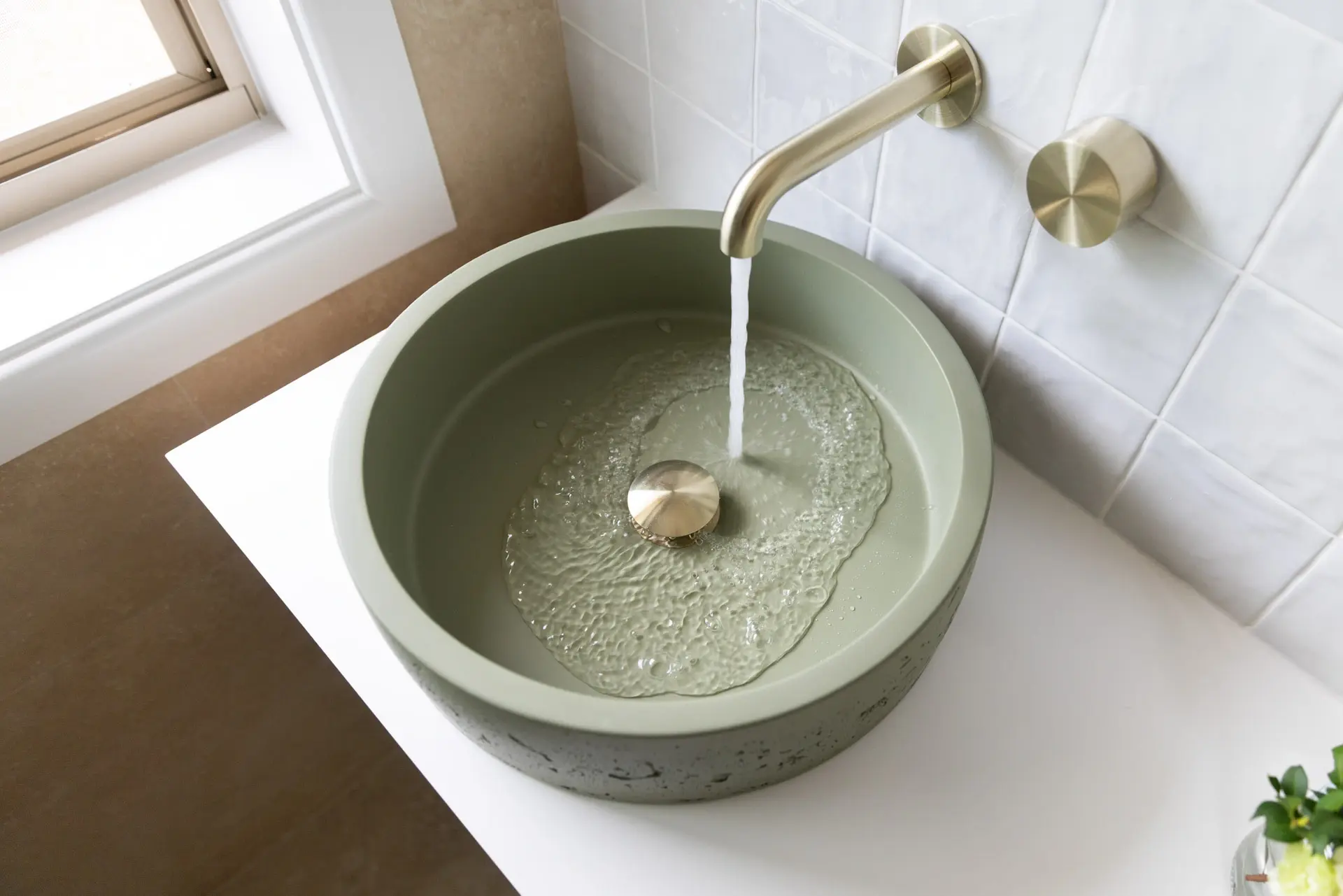
Once your bath choice, layout and tile palette are locked in, tapware becomes the finishing layer that makes the whole room feel intentional. Explore Nero Tapware’s bathroom tapware collections to choose a consistent finish across bath, shower, basin and accessories — so the final space reads calm, cohesive and built to last.
From sleek mixers and floor‑mounted bath fillers to carefully crafted accessories, Nero offers enduring quality and a palette of finishes to suit every style. Modern simplicity meets considered design – your home, your style, Nero is the finishing touch.
Important Disclaimer: This article provides general information only and is not a substitute for professional building, plumbing or legal advice. Requirements vary by state/territory and can change. Always confirm compliance with the NCC, your local council/building surveyor, and licensed trades for your specific site and scope. All product selections should be confirmed against manufacturer instructions and installation requirements.