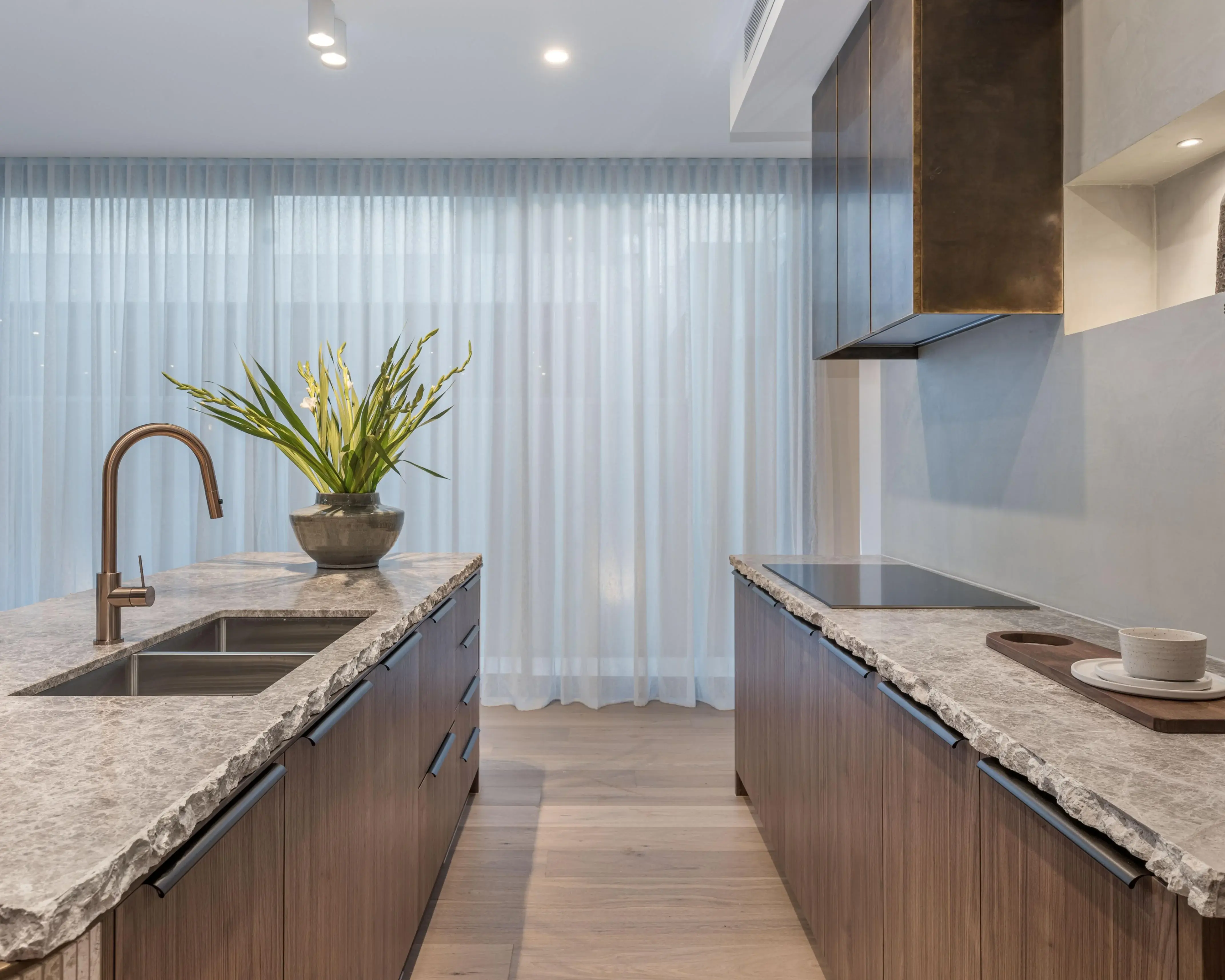
Quartzite countertops: the ultimate guide for Australian homes
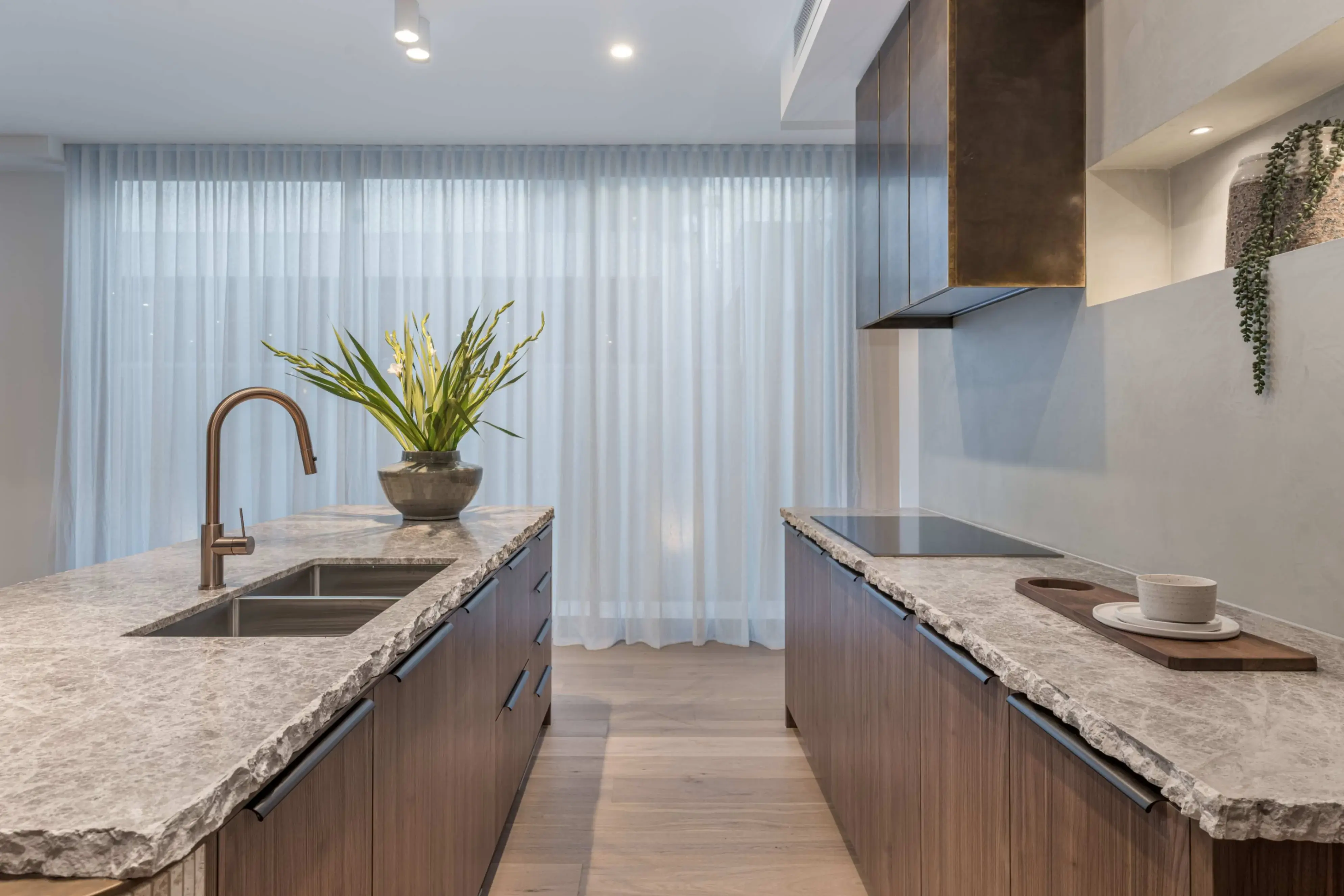
Why quartzite countertops are having a moment
Engineered stone once dominated Australian kitchens, but new safety regulations have changed the landscape. From 1 July 2024, engineered stone benchtops, panels and slabs were prohibited for manufacture, supply, processing and installation under WHS laws. From 1 January 2025, engineered stone benchtops, panels and slabs also became prohibited imports.
Homeowners now look to natural materials that offer comparable strength and beauty without the regulatory headaches. Quartzite countertops provide that answer: a naturally formed stone with marble‑like veining, superior hardness and a rich palette of colours.
This guide explains what quartzite is, how much it costs in Australia, and why it may be the perfect centrepiece for your kitchen or bathroom.
One clarity note: because WHS laws are implemented by states and territories, the practical details and any transitional arrangements can vary slightly by jurisdiction—so it’s worth checking your local WHS regulator if you’re unsure.
Quartzite countertops at a glance:
- Cost guide: In Australia, quartzite countertops generally sit around $800–$1,500+ per m² installed, which sits above engineered quartz but varies by slab grade, thickness and fabrication detail. Statement stones (book-matched, waterfall ends, rare colours) push higher.
- Durability & look: Quartzite is a natural metamorphic stone. It’s harder than granite, resists heat and UV, and offers distinctive veining reminiscent of marble. However, it’s heavy, needs sealing and is more expensive than some alternatives.
- Compare materials: With Australia banning the supply and installation of engineered stone from 1 July 2024, quartzite offers a compelling, durable alternative. Understand the differences between quartzite, quartz, granite and other materials to choose wisely.
- Maintenance matters: Sealing and gentle cleaning keep quartzite beautiful. Use pH‑neutral cleaners, wipe spills promptly and re‑seal as needed to minimise staining and etching.
What is quartzite?
Quartzite is a metamorphic rock formed when sandstone is exposed to high heat and pressure deep within the earth. Over time, quartz crystals fuse together, producing a dense, glassy stone with striking natural patterns.
Unlike engineered quartz (a manufactured blend of resin and crushed stone), quartzite is cut directly from quarries and then slabbed and polished. It typically scores around 7-8 on the Mohs hardness scale—higher than granite—meaning it resists scratches and chipping and holds up well in busy kitchens.
Because it is quarried, each slab is unique in colour and veining, with shades ranging from creamy whites to deep greens and blues.
Also Read: Timber benchtop cost in Australia: best woods, finishes & alternatives
Quartzite vs. quartz countertops explained
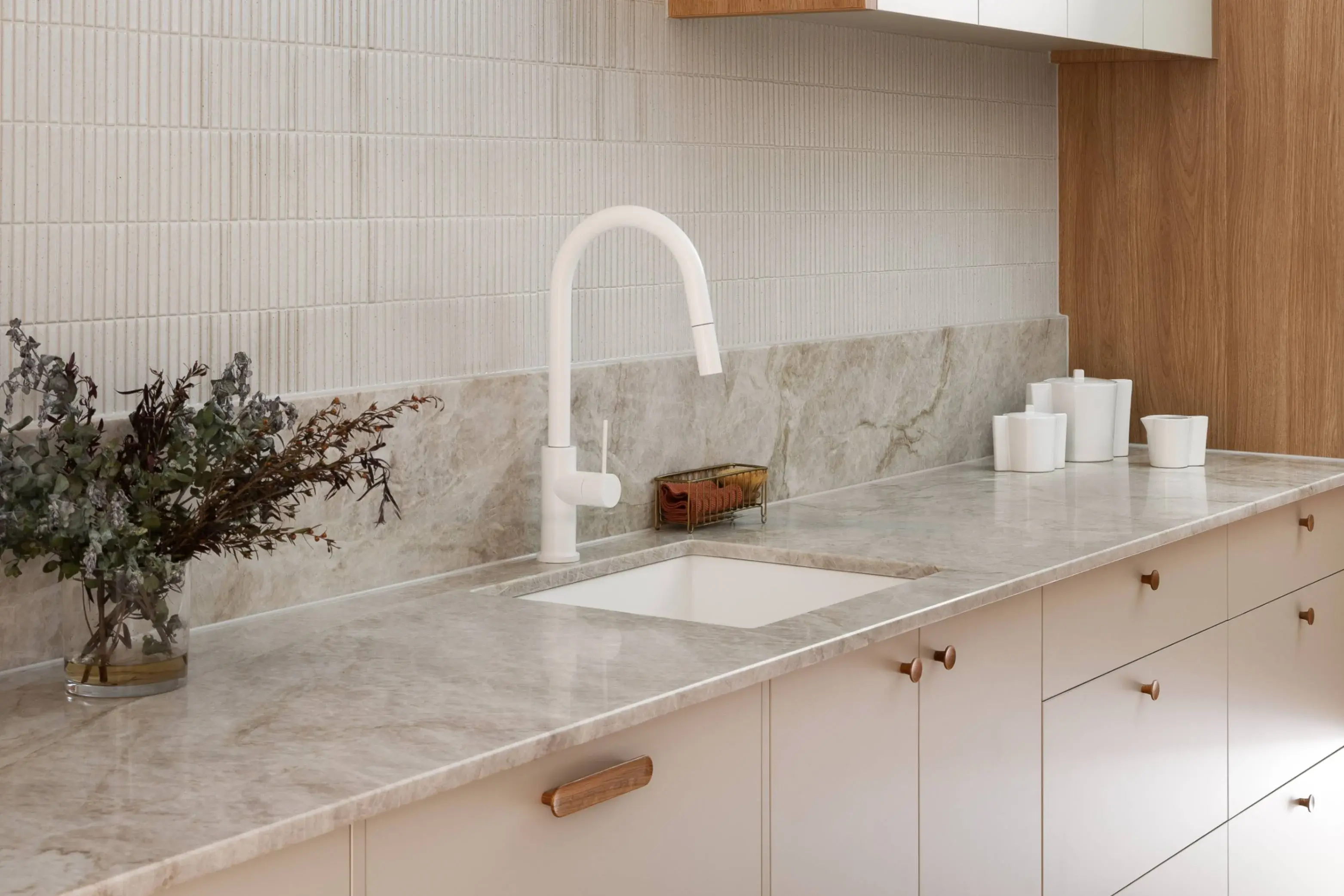
While quartzite has a higher price point and requires periodic sealing, its natural beauty, superior heat resistance and long lifespan make it an attractive option for those seeking a stone that will last decades. Because quartzite does not contain resins, it is also more UV‑stable—an important consideration for indoor–outdoor kitchens or spaces flooded with natural light.
Feature | Quartzite | Engineered quartz |
Composition | 100 % natural metamorphic stone | 90–95 % ground quartz bound with resin |
Appearance | Unique veining, wide natural colour range | Uniform, repeatable patterns |
Durability | Harder than granite; resists heat and UV | Resistant to scratches; avoid direct heat (prolonged heat can affect resin). Resin-based surfaces can also shift over time in strong UV. |
Maintenance | Needs sealing to prevent stains; mild cleaning | Low maintenance; does not need sealing |
Cost (per m²) | Typically $800–$1,500+ per m² installed (stone grade + fabrication are the big swing factors) | Pre-ban guide: engineered stone was often quoted around $390–$550 per m² for the slab, plus fabrication/installation |
Regulation | No restrictions on natural quartzite | Banned for supply and installation from July 2024 |
Is quartzite good for kitchen countertops?
Short answer: yes, but it depends on your priorities. Quartzite’s combination of hardness and heat resistance means it stands up well to everyday cooking and meal prep. Its ability to mimic marble without the same softness appeals to homeowners who love the look of natural stone but worry about etching.
However, because quartzite is heavy and requires careful fabrication, installation costs can be higher. It also needs sealing to prevent water and oil stains. Consider the pros and cons below.
Also Read: Ultimate Travertine Guide: What It Is, Types, Cost, Installation & Care - Nero Tapware
Quartzite countertops pros and cons
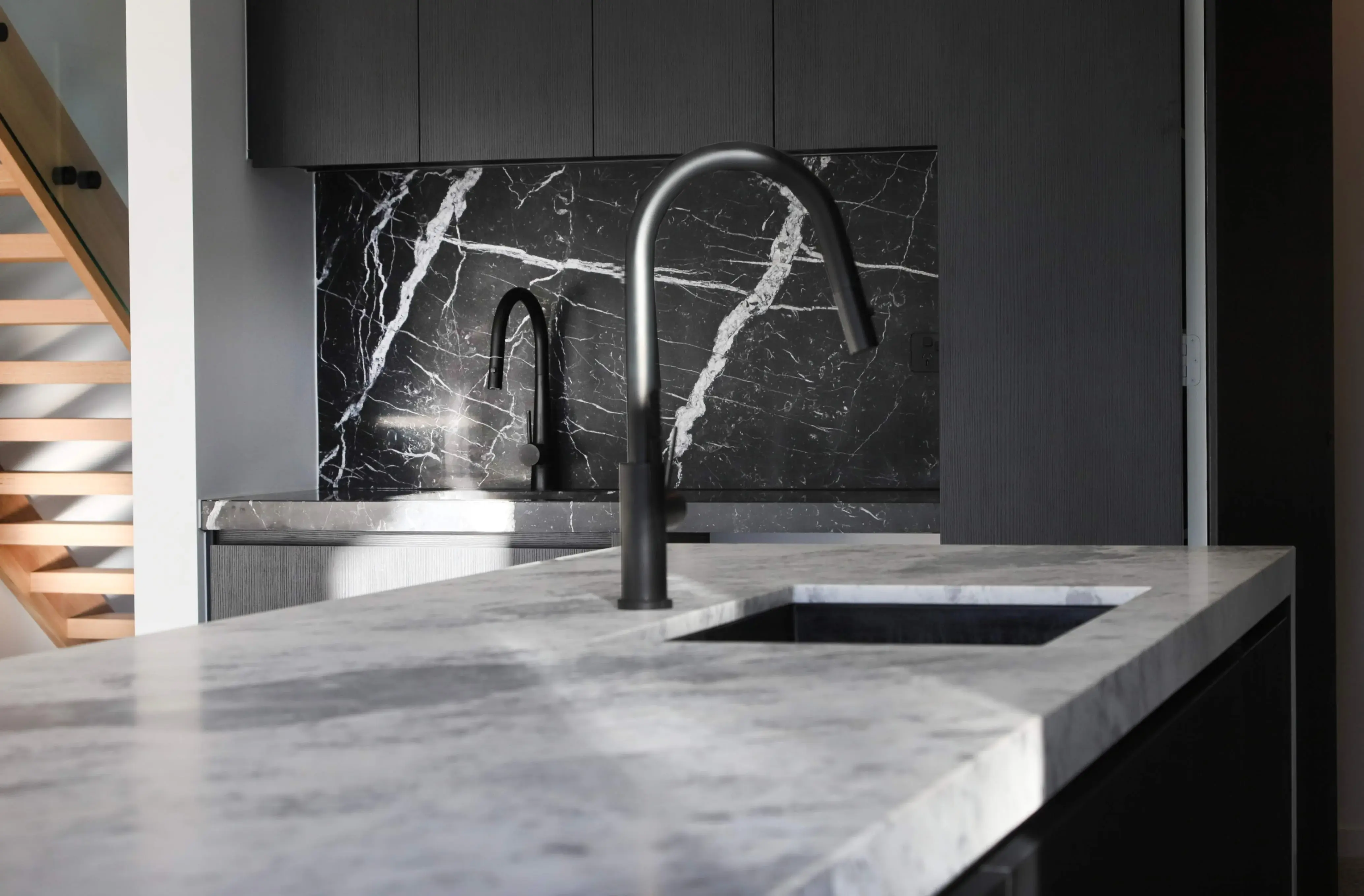
Quartzite is the stone people fall for at the showroom—soft, marble-like veining with a brighter, more natural depth. The real question is what it’s like at 7am with coffee spills, hot pans, and a kitchen that actually gets used.
This quick pros-and-cons snapshot is designed to answer the things most buyers worry about: is it durable, will it stain, how much upkeep does sealing take, and is the price worth it? Use it to decide if quartzite fits your home and your habits—not just your mood board.
Pros of quartzite countertops
- Marble-style movement, without the marble nerves. Quartzite can carry that soft veining and natural drift people love in marble. It usually holds up better in daily kitchen life—as long as it’s true quartzite, not a mislabelled lookalike.
- Built for real kitchens, not just pretty photos. Quartzite is typically very hard (often cited around Mohs 7–8), so it handles everyday wear well. It also tolerates heat, but a trivet is still wise to protect the sealer and avoid thermal shock.
- Sun-friendly stone that doesn’t “wash out.” Quartzite is generally UV-stable, so it suits bright, sunlit rooms and indoor–outdoor living. That’s a key difference from resin-based surfaces, which can shift or fade under harsh sun.
- Easy day-to-day, with one quiet routine. Cleaning is simple: a soft cloth and a mild, non-acidic cleaner keeps it looking clear. The only ongoing task is resealing—small effort, big payoff.
Cons and considerations
- A higher price tag—because it’s the real thing. Quartzite often sits at the premium end of natural stone. Rarity, veining drama, thickness, and fabrication details can move the quote quickly.
- Sealing isn’t optional—it’s the deal. Quartzite is porous, so sealing matters if you want calm mornings and no stain anxiety. Many homes reseal about every 1–2 years, depending on use and the stone itself.
- It’s heavy, and it needs a confident base. Quartzite slabs have real weight. Your cabinetry must be solid, and overhangs may need extra support—this is a job for experienced fabricators and installers.
- You don’t get “uniform”—you get character. Every slab is unique, which is part of the appeal. But in large kitchens, matching veining across joins can take more slab selection (and sometimes more cost), especially if you want a seamless flow.
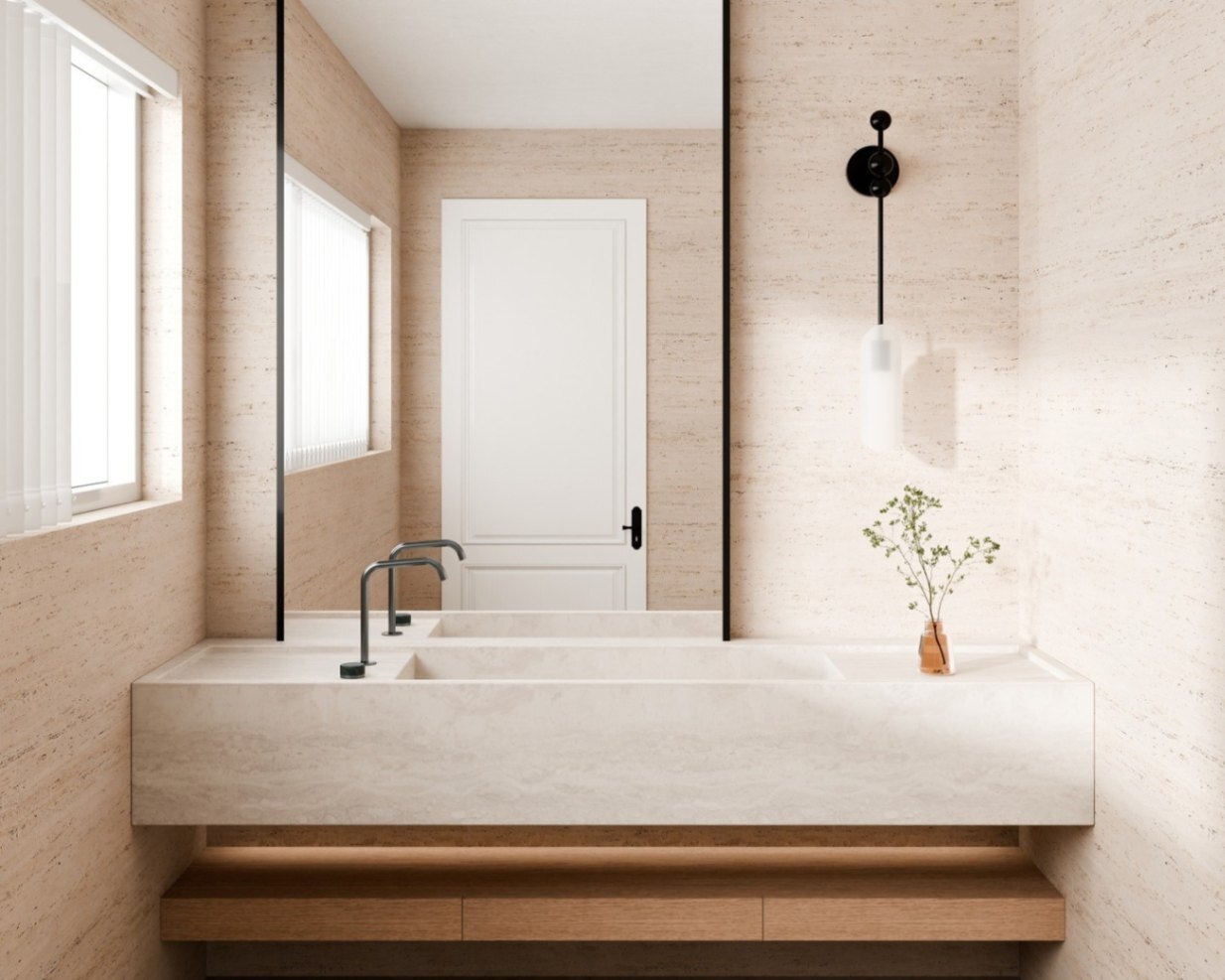
Quartzite countertops for bathroom: vanities, splashbacks, and wet zones
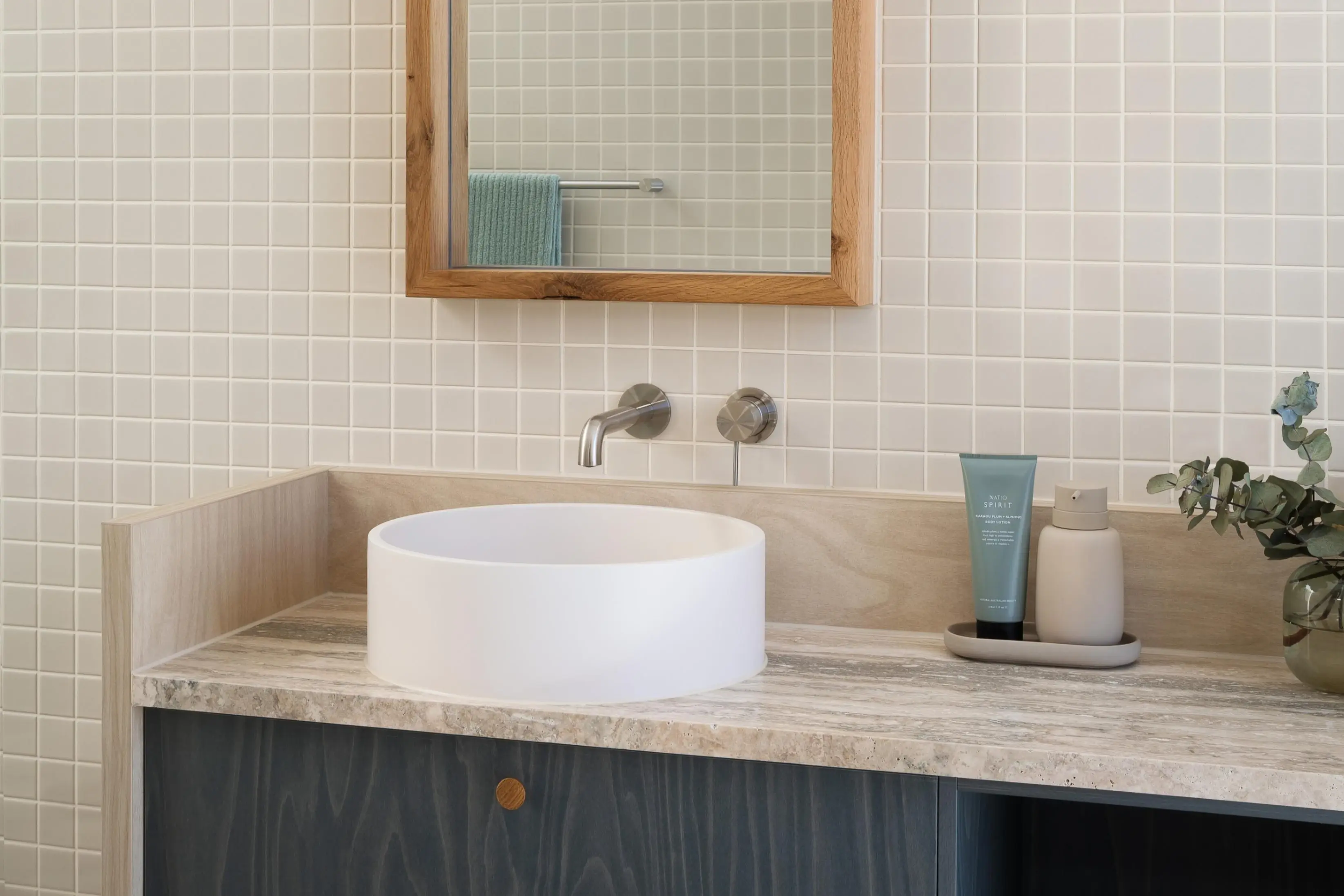
Quartzite can be a beautiful bathroom choice when you want stone that feels quietly luxe, not loud.
It brings a calm, natural movement to vanities and splashbacks, and it tolerates the everyday heat of styling tools better than many people expect.
In humid rooms, it also performs well—so long as sealing stays part of the rhythm, not an afterthought.
Quartzite works especially well for:
- Vanity benchtops that you want to feel timeless and tailored
- Splashbacks where you want natural veining to do the decorating
- Bath decks and ledges that need to handle warm water, steam, and daily use
- Powder rooms where one standout slab can carry the whole mood
Expert tip: Polished quartzite is the easiest to live with—it wipes down quickly and shows fewer water marks. Honed finishes feel softer and more organic, but they can be a little more absorbent, so plan to reseal more often.
Nero Design Tip: Let the stone’s undertone lead. If your quartzite reads warm—cream, honey, beige veining—brushed gold or brushed bronze tapware can make the whole space feel intentional. If it reads cool—grey, blue, crisp white—brushed nickel or gun metal tends to look calmer and more seamless.
Also Read: Limestone Ultimate Guide: Design Ideas, Costs & Care Tips - Nero Tapware
How much do quartzite countertops cost in Australia?
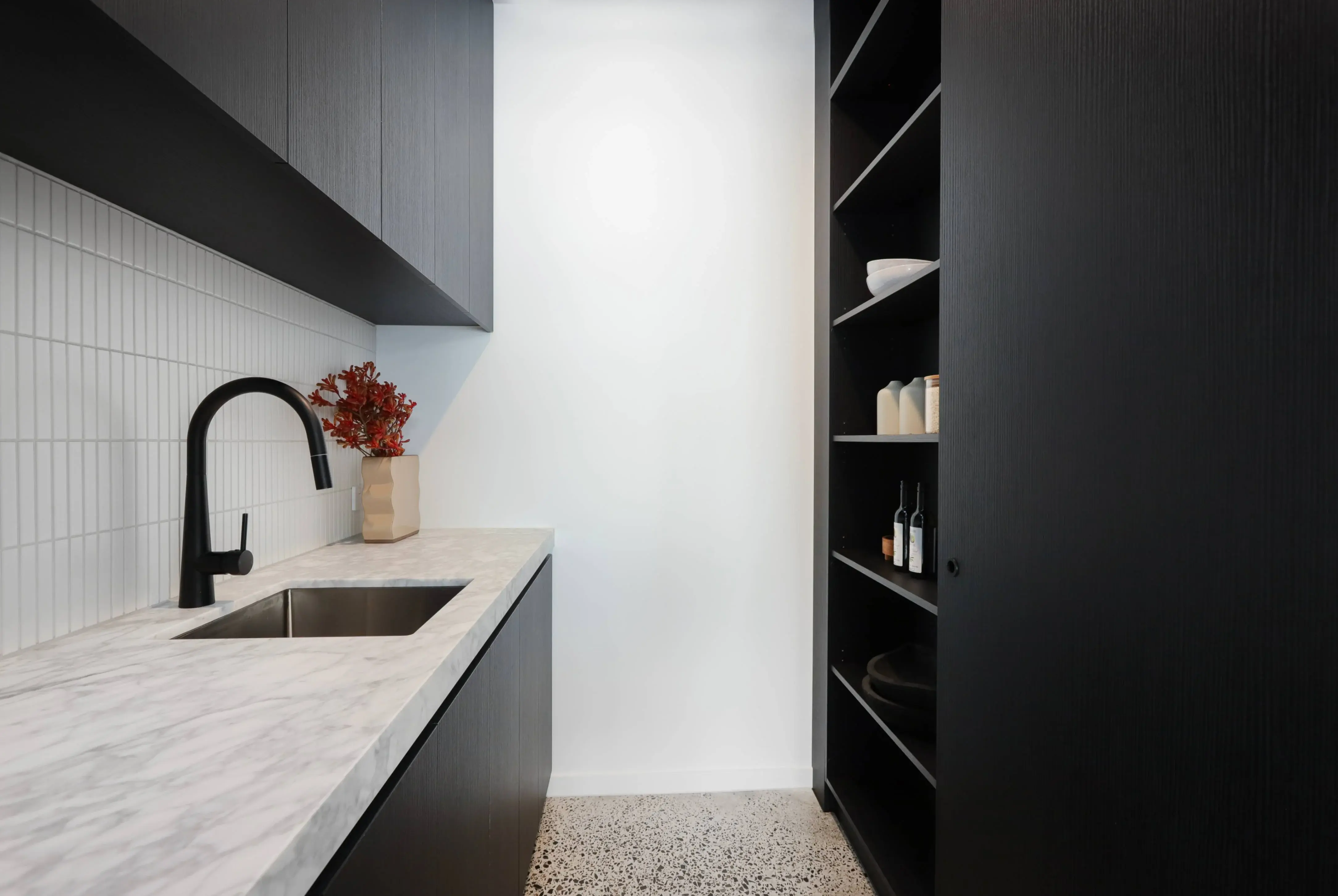
In Australia, a realistic ballpark for installed quartzite benchtops is $800–$1,500+ per m². Where you land in that range depends on the slab itself (rarity, movement, translucency), plus the “maker’s math”: cut-outs, edge profiles, seam placement, access to site and whether you’re adding waterfall ends or an integrated splashback.
For context, prior to the 1 July 2024 ban, engineered stone was commonly priced at roughly $390–$550 per m², with installation (and often fabrication items like cut-outs and edge profiles) priced separately or bundled depending on the supplier/installer.
Indicative quartzite benchtop price tiers (AUD, supply + fabrication + installation)
The table below illustrates typical price tiers for a kitchen quartzite benchtop (AUD), assuming ~3–5 m² of surface area (larger if you have an island or waterfall ends):
Budget tier | Typical total cost (AUD) | Description | Who it suits |
Entry quartzite (3–5 m²) | $3,500–$7,500 | Basic slabs with minimal veining, simple straight edges and limited cut‑outs (1–2 cut-outs for sink/cooktop), fewer joins. Installation may reuse existing cabinetry. | Smaller kitchens, apartments, laundries, or “natural stone look” upgrades without heavy feature details where premium aesthetics matter less. |
Mid-range quartzite (5–7 m²) | $7,000–$14,000 | Popular colour options with more consistent and moderate movement/veining, standard edge profiles, and 2-3 cut‑outs (sink, cooktop), typical joins and splashback upstands (sometimes). | Typical family kitchens aiming for a durable yet stylish upgrade. |
High-end quartzite (7–10 m²) | $12,000–$20,000+ | Premium exotic colours or book‑matched slabs, stronger veining, mitered or waterfall edges, extensive cut‑outs, more joins, integrated splashbacks, higher handling and install complexity. | Large open‑plan kitchens or luxe renovations seeking a design statement. |
Note: These figures are indicative and typically include supply and installation, but quotes vary with slab grade, thickness, site access, edge detail, joins, the number of cut-outs, access, and location.
Quartzite is often priced by the slab at stone yards. As a guide, 20 mm quartzite slabs commonly sit around ~$2,500–$6,000+ (plus GST) per slab range, depending on size, colour, and rarity. That’s before fabrication, delivery and installation are added.
If you’re adding waterfall ends, mitred edges, integrated splashbacks, or lots of cut-outs, expect costs to land toward the upper tiers (even with the same m²). Factor in additional costs for cut‑outs, edging, reinforcing cabinetry and sealing.
Also Read: Kitchen Renovation Cost in Australia: Detailed Cost Guide & Savings Tips (2026) | Nero Tapware
Quartzite countertops cost per square foot: a quick conversion
In Australia, benchtops are usually priced per m². If you see pricing in square feet (often from overseas sources), use this conversion.
- 1 m² = 10.7639 sq ft
- AUD per sq ft = AUD per m² ÷ 10.7639
Using the installed range in this guide ($800–$1,500+ per m²), that’s approximately ~$74–$139 per sq ft installed. Keep in mind: “per sq ft” quotes are often supply-only, while Australian pricing is usually installed.
If you’re reading overseas pricing, treat it as directional only: many US quotes are materials-only (around US $50–$150 per square foot), while Australian benchtop pricing is commonly discussed as an installed figure.
Important: Always confirm whether the figure is supply-only vs installed, and whether it includes cut-outs, edge profiling, delivery, and GST—those are where quotes can shift fast.
Quartzite kitchen countertop cost breakdown by component
Use the table below as a quick, at-a-glance guide to where the budget typically lands in a mid-range project. Pricing shifts by region, access, and supplier—so treat these figures as a planning lens, then sanity-check them with multiple quotes before you lock anything in.
Cost item | Typical share of budget | Interpretation |
Quartzite slab | 40–60 % | Premium stones such as Taj Mahal or Macaubas Blue command higher prices than common white varieties. |
Fabrication & edging | 15–25 % | Straight edges cost less; mitered waterfalls or intricate profiles add labour. |
Installation | 15–20 % | Includes delivery, site measurement and labour; difficult access (stairs, tight spaces) increases cost. |
Cut‑outs & sink | 5–10 % | Cut‑outs for sinks, cooktops or integrated drainboards require precision and reinforcement. |
Sealing & finishing | 2–5 % | Initial sealing and periodic re‑sealing are essential to protect against stains. |
Interpretation: If your quote allocates $12,000 for a mid‑range 5 m² countertop, roughly $6,000–$7,000 pays for the stone itself. A high spend on fabrication signals complex edge details or waterfall ends. By comparing line items across quotes, you can see where suppliers differ and negotiate accordingly.
Also Read: Bathroom Renovation Cost Australia Guide – Average Prices & Smart Budgeting Tips
Practical examples: three quartzite countertop “recipes” you can copy (with pricing)
How to use these: Pick the plan that matches your bench size and look. Then ask your stonemason to quote it as written (m², edge, cut-outs, splashback). You can swap colours without changing the build.
Quartzite countertop plans at a glance:
Copyable plan | Typical bench area | What’s included | Estimated installed price (AUD) |
1) Small apartment galley: simple + clean | ~4 m² | 20 mm slab, straight/eased edge, 1 sink + 1 cooktop cut-out | $3,500–$7,500 |
2) Family kitchen: one “hero” detail | ~6 m² | 20 mm slab, mitred edge on island only, small upstand, 2–3 cut-outs | $7,500–$15,000 |
3) Coastal statement: feature island | ~8 m² | Book-matched island top, one waterfall end, perimeter kept simpler | $14,000–$28,000 |
Why ranges (not single numbers)? Quotes move fast based on slab grade, how many slabs are required, access (stairs vs lift), and edge/cut-out complexity. The baseline m² range above is a useful starting point.
1. Small apartment galley (about 4 m²): clean lines, low-fuss fabrication
Estimate: $3,500–$7,500 installed.
This suits apartments where access and lift size matter. Keep the spec simple with a 20 mm quartzite countertop in a light, quiet pattern. Choose a straight (eased) edge to keep labour down with only essential cutouts—1 sink + 1 cooktop, with no extra drainer grooves.
Nero Design Tip: If you want the whole space to feel lighter, pair the stone with a Serenity mixer in Matte White so the tapware blends into pale splashback tiles and reads calm.
Copy this checklist:
- Thickness: 20 mm
- Edge: straight/eased (no mitres)
- Cut-outs: 2 total (sink + cooktop)
- Splashback: tile (not stone)
2. Family kitchen (about 6 m²): mid-range upgrade that still feels “designed”
Estimate: $7,500–$15,000 installed.
You’re paying for one upgrade detail (like a mitred “40 mm look” on the island) without turning the whole project into a feature build.
Choose quartzite stone countertops with a warm or mid-tone vein. Add one “hero” detail that still stays practical: a 40 mm look using a mitred edge on the island only (keep the rest 20 mm). Add an 80–150 mm stone upstand behind the sink instead of a full-height slab splashback.
Nero Design Tip: A Meccakitchen mixer in Brushed Nickel ties in neatly with stainless appliances and handles, so the whole kitchen looks intentional without being busy.
Copy this checklist:
- Thickness: 20 mm, with mitred “40 mm look” on island edge only
- Edge: mitred island, straight on perimeter
- Cut-outs: 2–3 (sink + cooktop + optional filtered water tap hole)
- Splashback: small stone upstand (not full-height)
3. Coastal “statement” kitchen (about 8 m²): high-end impact without risky choices
Estimate: $14,000–$28,000 installed.
Book-matching and waterfall panels can increase slab usage and labour. Keeping the perimeter simple is the easiest way to keep this tier from blowing out.
Pick quartzite with movement (strong veining) and use it where it counts: waterfall end on the island + one book-matched feature section (often the island top).
Keep the perimeter benches simpler to reduce waste and slab count. If you want an outdoor servery, match it in the same finish and confirm your fabricator recommends it for your exposure and sealing routine.
Nero Design Tip:Bianca in Brushed Gold gives a warm, quiet contrast against pale coastal quartzite and softens white cabinetry.
Copy this checklist
- Feature: book-match on island top only
- Waterfall: 1 end (not both) to control cost
- Cut-outs: plan early (extra holes cost more later)
- Outdoor servery: same stone + commit to sealing schedule
What drives the cost of quartzite stone countertops?
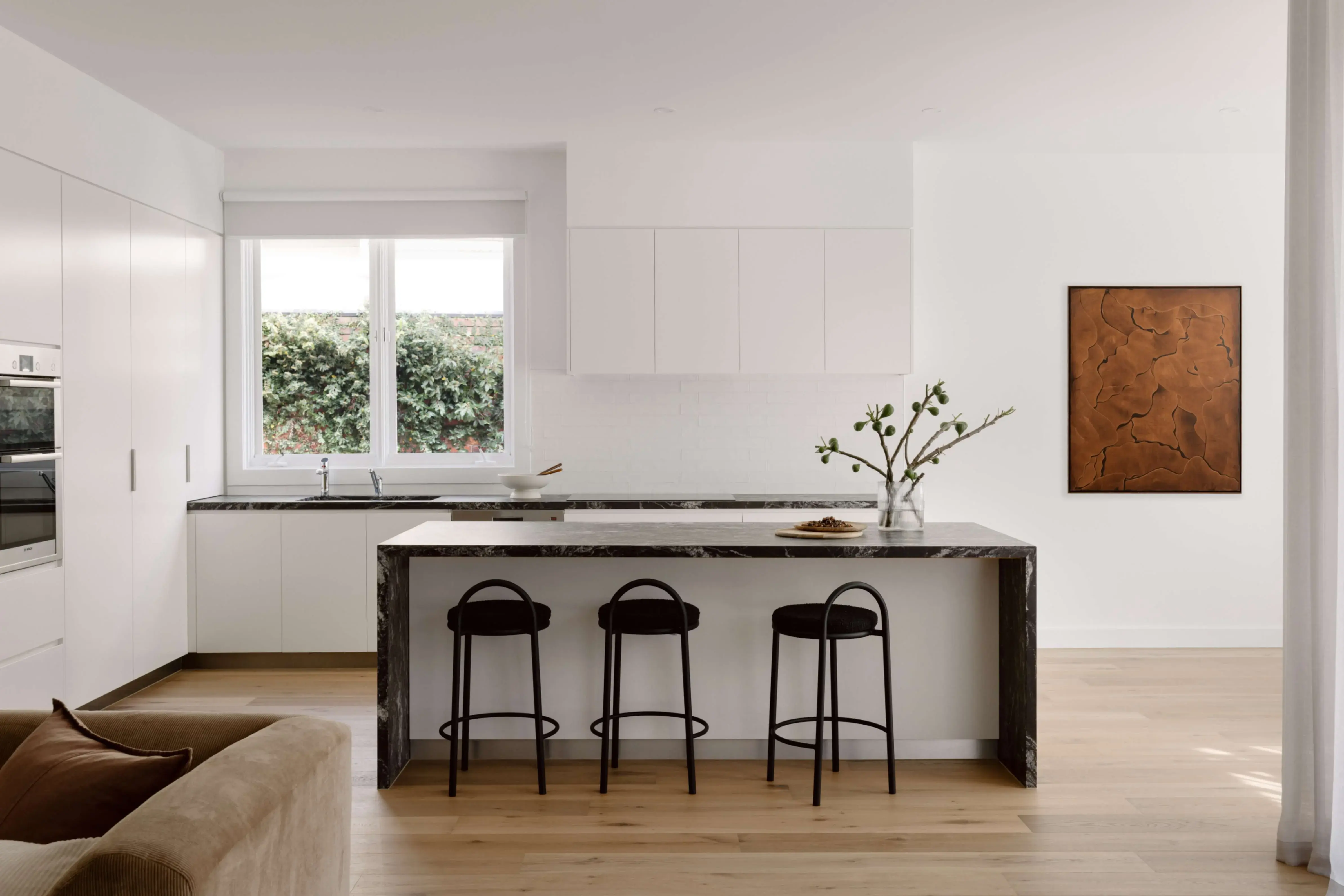
Quartzite pricing isn’t random — it’s the sum of a few very tangible decisions: the slab you fall in love with, the thickness and edge you choose, how intricate the fabrication is, and how hard the site is to access.
Two kitchens can look similar in photos, yet land worlds apart in quotes once you factor in rarity, seams, cut-outs and installation logistics. Here’s what actually moves the needle.
1 Slab rarity and colour
With quartzite, the price often starts long before it reaches your kitchen. Rarer stones—think deep blues (Blue Macaubas), rich greens (Emerald Quartzite), dramatic movement—are quarried in smaller volumes and priced accordingly. More common whites and greys tend to sit in a friendlier band.
There’s another quiet cost driver, too: continuity. Because every slab is one-of-one, matching veining across joins (especially on an island or long run) can mean buying extra material so the fabricator can “bookmatch” or select from the same block.
2 Thickness, size and the “profile” you’re chasing
In Australia, 20 mm quartzite is the common starting point for benchtops. Move up to 30 mm, or ask for a bold, thick-looking edge, and you’re paying for more stone and more time on the saw.
Bigger kitchens add another layer: more slabs, more joins, and more offcuts. Fabricators factor that wastage into the quote, especially when you’re chasing strong veining and want the best sections in the most visible zones.
A simple way to choose:
- 20 mm: Clean, modern lines and a lighter visual feel. Often the most cost-friendly.
- 30 mm: More “architectural” and substantial. A natural fit for higher-end builds and classic detailing.
- Mitred thick edge (the 40 mm look): A bold profile without the full-thickness slab, but it adds fabrication labour.
Thickness also affects practical details like sink cut-outs, overhang support, and whether cabinetry needs reinforcement. If you love the thicker look, a mitred edge often delivers the visual impact without the extra weight of a full 30 mm slab.
3 Fabrication complexity (where the labour hides)
Quartzite isn’t priced like a flat sheet—it’s priced like a custom piece of joinery. Waterfall ends, undermount sinks, integrated drainboards, curved edges, and detailed corner work all add labour, tooling wear, and reinforcement.
Layout matters too. More corners, more seams, or tricky cut-outs usually means more time, more precision, and more risk—so it shows up in the final number.
In compact kitchens (hello, inner-city apartments), there’s a different kind of complexity: the stone still arrives heavy and oversized, and getting it in safely can take extra hands and careful manoeuvring.
4 Installation conditions (access changes everything)
A quartzite install isn’t just “delivery”. If access is tight—narrow stairs, small lifts, steep driveways, awkward turns—fabricators may need extra crew, specialised lifting gear, or more time on site.
And across Australia, labour and logistics vary. Metro rates can differ from state to state, and regional projects may include travel time, transport surcharges, or overnight costs—especially if you’re working remotely.
Design-side takeaway: When you’re comparing quotes, ask what’s included for access, handling, and site conditions. Two prices can look similar on paper, but the installation assumptions underneath may be very different.
Quartzite vs granite (and the other contenders): how to choose the right stone for your home
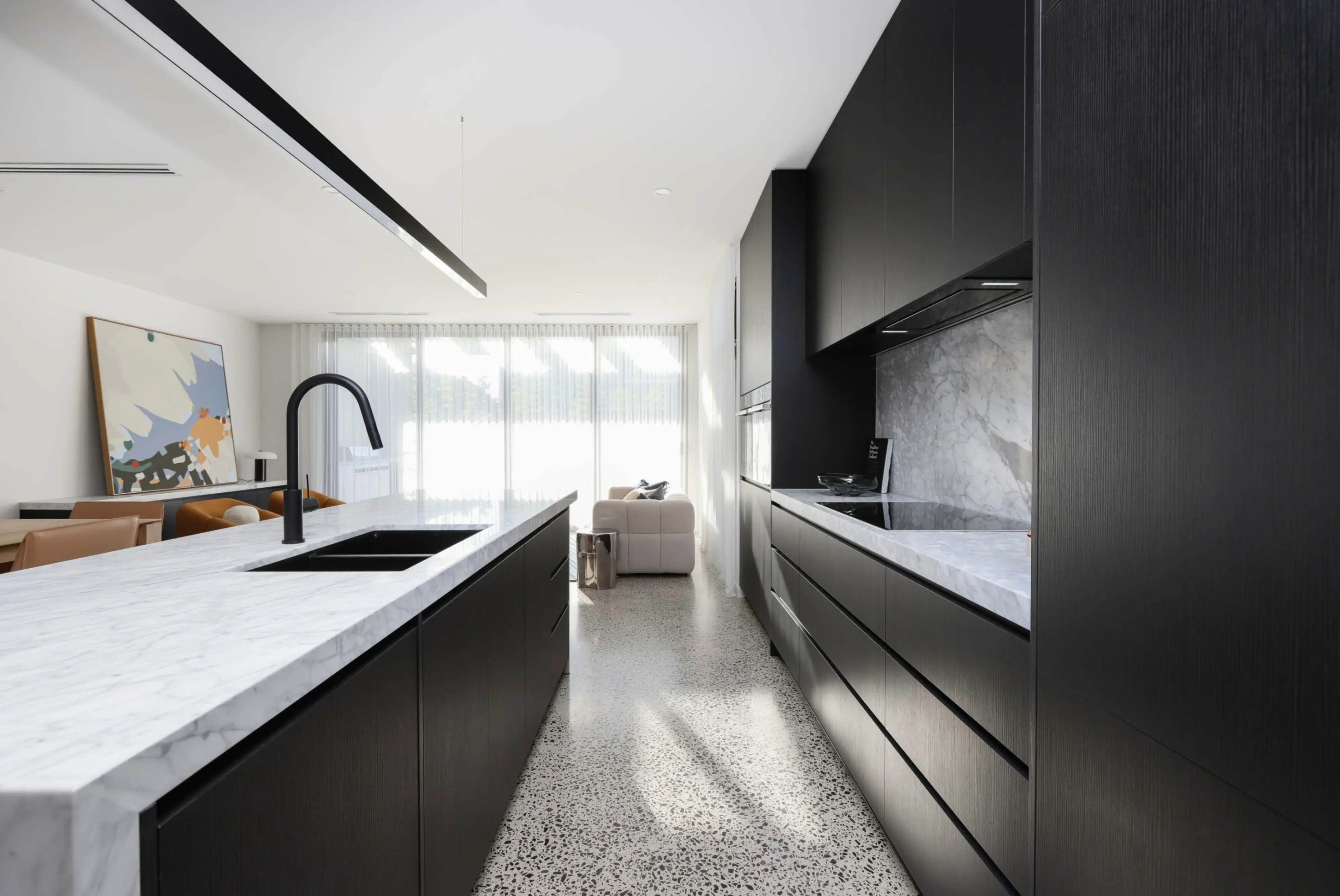
Natural stone isn’t your only option. Here’s how quartzite stacks up against other popular countertop materials:
Material | Best for | Key benefits | Drawbacks | Approx. cost (installed) |
Quartzite | Those seeking a marble‑like look with superior hardness and heat resistance | Unique veining, high durability, UV stability | Heavier, high cost, requires sealing and professional installation | $800–$1,500+ per m² installed |
Classic natural stone fans | Durable, heat resistant, wide range of colours | Patterns may be busier; less uniform; still needs sealing | $650–$2,000+ per m² installed | |
Marble | Design-led homes where the veining is the hero (islands, vanities, butler’s pantries) | Iconic, high-end look; brightens a space; naturally cool underhand | Softer and more porous than quartzite; can etch from acids; scratches easier; needs sealing and gentle cleaning | $800–$2,500+ per m² installed |
Porcelain | Sleek modern kitchens, low-fuss looks | Very heat, stain and UV resistant; thin, crisp profiles; minimal maintenance | Can chip at edges; limited thickness for waterfall ends | ~$700–$1,600+ per m² incl. basic fabrication/installation (guide only) |
Laminate | Budget or rental projects | Very affordable; huge pattern variety | Low heat resistance; can swell if water penetrates seams | ~$120–$350 per m² (material only; installation varies) |
Timber | Warm, organic feel | Adds warmth and can be renewed by sanding; softens modern joinery | Scratches and stains easily; needs regular oiling | ~$350–$1,200 per m² (material only; installation varies) |
Nero Design Tip: When choosing finishes to complement your countertop, think about undertones. Warm‑toned quartzite pairs beautifully with brushed gold or brushed bronze tapware, while cooler stones love brushed nickel or gun metal. Nero’s Opal collection, for example, offers slimline mixers in a range of finishes that mirror the subtlety of natural stone.
Also Read: Ceramic tiles, explained: A design-smart guide for Australian homes
Living with quartzite counters: sealing, stain-proof habits and the easy cleaning routine
Quartzite looks effortless, but it stays that way with a few simple habits. This is the quick guide to sealing, spill rules, and the gentle cleaning routine that keeps the stone clear and calm in an Australian kitchen.
Does quartzite need to be sealed?
Yes. Quartzite is less porous than marble but more porous than engineered quartz. Sealers fill microscopic pores and prevent water and oil from penetrating.
A simple way to test whether your countertop needs re‑sealing is to place a few drops of water on the surface. If the water darkens the stone within 10 minutes, it’s time to re‑seal. If the stone you’ve chosen is porous or light-coloured, resealing yearly is a sensible Australian rule of thumb. Denser slabs may stretch longer—use the water-drop test as your cue rather than the calendar.
Cleaning tips and the best cleaner for quartzite counters
Daily cleaning should be gentle:
- Use a soft cloth or sponge with warm water and a stone-safe, pH-neutral cleaner.
- Avoid acidic products such as vinegar or citrus, which can dull or etch natural stone.
- Blot spills quickly—especially wine, coffee and oils—then clean and dry the area. If a mark won’t lift, avoid abrasive DIY pastes and harsh scourers. Instead, use a stone poultice or a stain remover recommended by your stonemason, and test first in a hidden spot.
- Don’t cut directly on the surface; always use a cutting board. Finish with a dry microfibre cloth to reduce streaks and bring back the natural sheen.
Does quartzite stain or etch?
Properly sealed quartzite is highly stain resistant, but it isn’t stain-proof. A good impregnating sealer slows stains down, not down to zero.Oils, red wine, and spices can still leave a mark if spills sit too long. That risk rises when the sealer has worn thin.
On etching, true quartzite (a quartz-rich stone) usually shrugs off lemon juice and vinegar.If your “quartzite countertop” dulls from those acids, treat it as a red flag. The slab may contain calcite/dolomite (often seen in dolomitic marble), or it may be mislabelled. Ask your supplier for the slab’s data, then follow the care plan that matches its chemistry. And keep strong acids away from any natural stone surface.
Can you cut on quartzite countertops?
The hardness of quartzite makes it resistant to scratches, but cutting directly on any stone surface is not recommended. Not only can it eventually mark the countertop, but it will quickly dull your knives. Instead, use a dedicated cutting board to preserve both the stone and your blades.
Compliance Check (AU): Avoid DIY grinding, sanding, cutting or polishing. Mechanical processing of natural stone can generate respirable crystalline silica (silica dust). For practical, official guidance on silica risks and dust-control measures, link to Safe Work Australia’s crystalline silica guidance and its Model Code of Practice on managing respirable crystalline silica.
Also Read: Safe & Stylish Alternatives to Engineered Stone Benchtops in Australia
Quartzite benchtop design: finishes, edge profiles and the details that make it feel bespoke
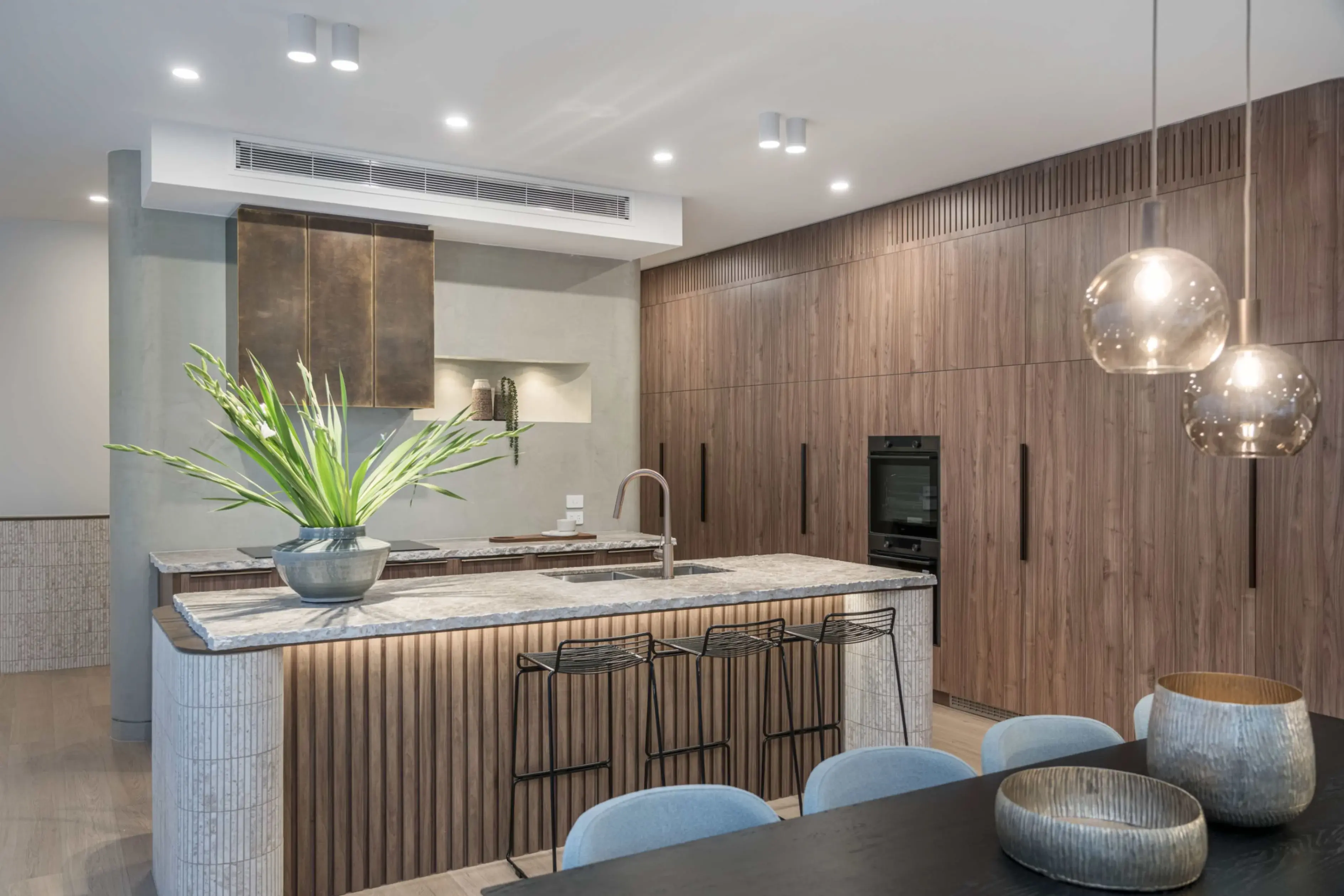
Quartzite’s natural movement really shines when the details are considered—from finish choice to edge profiles to the way your tapware “reads” against the stone.
Finish choices that change the mood: polished vs honed
- Polished quartzite has a glossy, light-reflective finish that amplifies colour and veining. It reads crisp and architectural—perfect for modern Australian kitchens that lean clean-lined or a little more glamorous. The trade-off is visibility: fingerprints and water spotting can show more easily, especially in strong daylight.
- Honed quartzite sits in the matte-to-satin zone, with a softer, more relaxed feel. It suits coastal, rustic and pared-back interiors and tends to disguise minor scratches and day-to-day marks better. Because honed surfaces can be slightly more porous, they often need more frequent sealing to stay stain-resistant.
Edge profiles: the quiet design move most people forget
Edge detailing shifts the feel of a benchtop without changing the slab.
- Square edges keep the look clean and contemporary.
- Pencil rounds soften the profile and feel more family-friendly.
- Mitred edges create that thick, waterfall-style statement without the weight of a full-thickness slab.
- Ogee or bullnose profiles lean traditional and can suit heritage homes, but may feel heavier in sharp modern schemes.
Tapware and hardware pairings: where the stone becomes a “scheme”
Tapware is the finishing layer that makes quartzite feel intentional, not accidental. If your stone reads crisp and cool (white, grey, blue), matte black can add structure and a modern frame—especially in clean-lined kitchens.
If your quartzite leans warm (cream, honey, beige veining), brushed gold tends to bring out the undertones and make the whole scheme feel considered. For a quieter, more seamless look—especially with stainless appliances—brushed nickel or gun metal usually sits beautifully against both warm and cool stones.
Nero style picks: for a calm, contemporary scheme, look at Mecca; for softer, minimal lines, Serenity; and for a refined, versatile profile that suits many palettes, Opal.
And beyond aesthetics, good tapware should feel effortless—built for daily use and made to last. Many Nero tapware pieces are made from lead-free DZR brass (check the spec on your chosen model), and Nero backs its finishes with a 25 Year Replacement Warranty on all finishes—so the “finished” feeling of your scheme stays consistent long after install. For full terms and what’s covered, link to Nero’s Warranty Policy.
Compliance check: Ask your stonemason about licensing/registration requirements in your state, plus insurance and a written warranty for workmanship and materials. For any plumbing changes, use a licensed plumber and keep the compliance paperwork. In Australia, many plumbing and drainage products must be certified under the WaterMark Certification Scheme (a mandatory scheme for specified product types), so it’s a good quick check when you’re selecting fixtures.
Conclusion & next steps: pairing your quartzite countertop with Nero Tapware
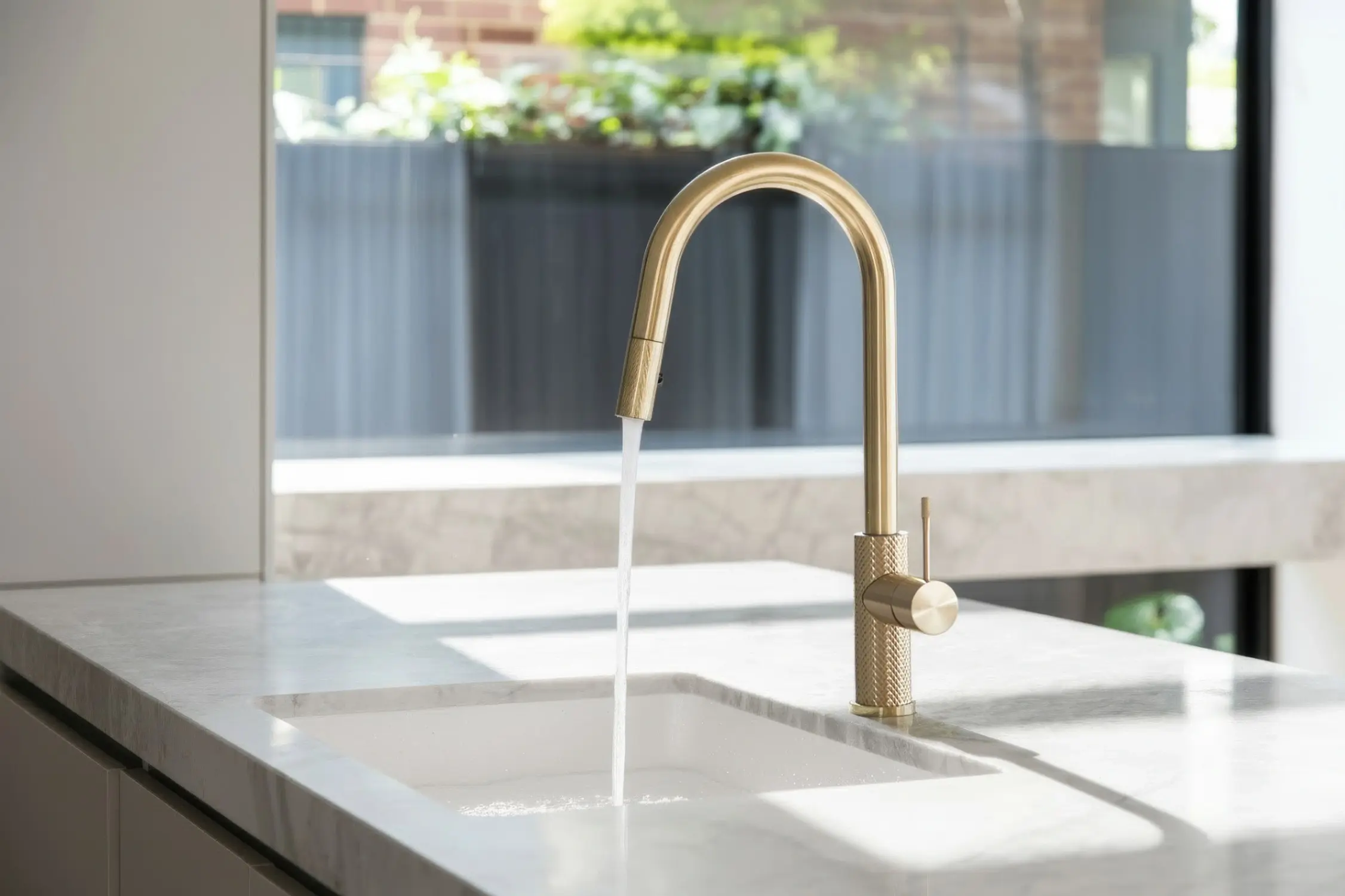
Quartzite countertops offer Australian homeowners a durable, beautiful and regulation‑compliant alternative to engineered stone. They combine the elegance of marble with the resilience of granite, though they come at a higher cost and require regular sealing.
By understanding the cost drivers and planning your project carefully, you can make informed choices about materials, finishes and trades. Remember to inspect slabs in person, obtain detailed quotes and ensure your installation complies with local regulations.
Once your budget is set, explore Nero Tapware’s collections—such as Mecca, Serenity and Opal—to complement your quartzite benchtop with fixtures designed in Australia for Australian homes. Modern simplicity meets considered design at Nero, where quality and simplicity are at the heart of every design.
Important Disclaimer: This article is provided by Nero Tapware for general information and design inspiration only. Nero Tapware is not a building, compliance, legal, financial, or health and safety authority. Cost figures are indicative ranges (AUD), not quotes, and will vary by location, scope, and market conditions. Always confirm current regulations with your local council or relevant state authority and seek advice and written quotes from appropriately licensed professionals before making decisions.